
Chimney Repair vs Rebuild? How to Know the Difference
Not sure if your chimney needs repair or a rebuild? Learn how damage location determines scope—and how to avoid paying for more work than you need.
On this page
Last fall, a homeowner in Ancaster showed me two quotes. One contractor said "full rebuild—$14,000." Another said "just needs tuckpointing—$800."

Neither was right.
The chimney was separating from the house above the roofline, but the foundation and below-roof section were solid. What he actually needed was a partial rebuild—take it down to the roofline, rebuild the top. Final scope: around $5,000.
This confusion happens constantly. Contractors use "repair," "rebuild," and "replacement" interchangeably. Homeowners can't tell what's accurate without understanding one simple principle: damage location determines scope.
This guide explains the difference between repair, partial rebuild, and full rebuild. By the end, you'll know what your chimney actually needs—and whether anyone's trying to oversell you.
Quick Answer: Repair vs Partial vs Full Rebuild
The roofline is your decision point. Damage above it? Often repairable or partial rebuild. Damage below it? That's foundation or structural territory.
| Option | When It Makes Sense | What It Involves |
|---|---|---|
| Repair | Isolated damage—crown, cap, mortar joints, small brick sections | Fix specific components without removing masonry |
| Partial Rebuild | Extensive damage above roofline, but below-roof structure is sound | Remove and reconstruct chimney above roof level |
| Full Rebuild | Leaning, foundation issues, or damage throughout entire structure | Tear down to base and reconstruct completely |
Rule of thumb: If damage is confined to components (crown, cap, mortar) or a few bricks, repair makes sense. If an entire section of masonry is failing above the roofline, partial rebuild is the smarter move. If the chimney is leaning or separating from the house, you're looking at full rebuild.
When Repair Is Enough
Repair means fixing what's broken—crown, cap, mortar, a handful of bricks—without tearing down masonry. If the structure is sound, you repair. Simple.
"Fix My Brick repaired the top of my chimney. They had a great price. They were able to repair it in a timely fashion. Their work was superb." — Kyle A.
What chimney repair covers:
- Crown damage — The sloped concrete cap that sheds water. Cracks here are the #1 entry point for moisture. Crown repair is routine and prevents bigger problems.
- Missing or damaged cap — The metal cover over the flue. Without it, rain, animals, and debris have a direct path inside.
- Failing mortar joints — Tuckpointing replaces receded or crumbling mortar. Keeps water out without touching brick.
- Small brick sections — A few spalling bricks don't mean a rebuild. We cut out the damaged ones and replace.
- Flashing problems — Where chimney meets roof. Leaks here often get blamed on the chimney when it's actually a flashing failure.
Repair is enough when:
- Damage is confined to specific components
- The brick and mortar are mostly sound
- There's no structural movement or leaning
- Water damage hasn't spread through the full structure
If you're seeing early warning signs like crumbling crown edges or missing caps, addressing them now prevents more expensive damage later. Crown issues specifically? The chimney crown repair guide covers the details.
When Tuckpointing Works
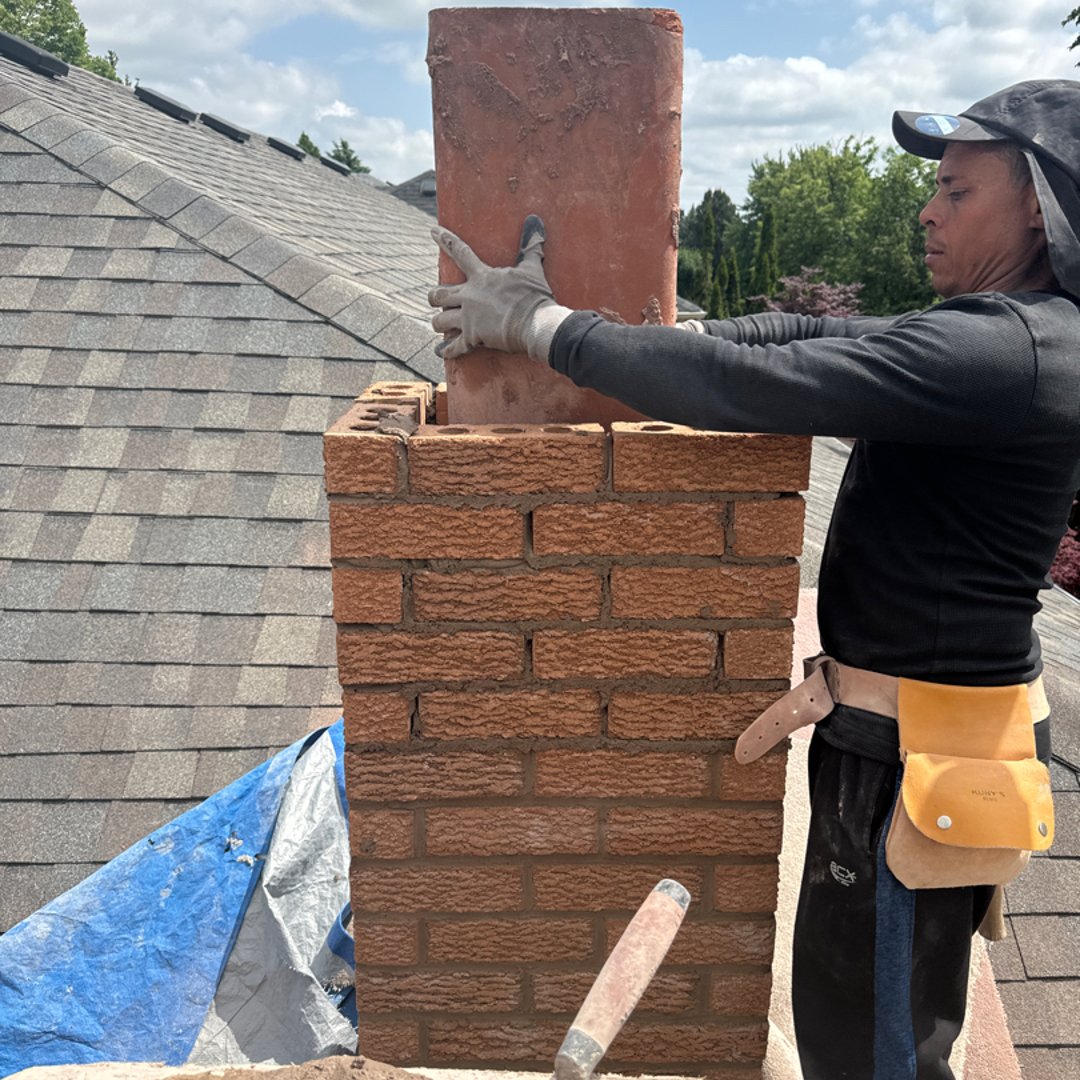
Tuckpointing means removing failed mortar from joints and replacing it with fresh mortar matched to the original. It's one of the most common chimney repairs—and one of the most misunderstood.
Tuckpointing works when:
- Mortar joints are receding or crumbling, but bricks are still solid
- Less than 25-30% of joints need replacement
- You catch it before water has penetrated deeply into the structure
Tuckpointing isn't enough when:
- Bricks themselves are crumbling or spalling badly
- More than 30% of joints are failing (at this point, rebuilding that section is more cost-effective)
- There's structural movement or widening gaps in the masonry
Ontario's freeze-thaw cycles put constant stress on mortar. Water seeps in, freezes, expands, and breaks down the bond. That's why catching joint failure early matters—tuckpointing now can add decades to your chimney's life. Wait too long, and you're looking at a rebuild.
When Partial Rebuild Makes Sense

A partial rebuild means removing the masonry above the roofline and reconstructing it while preserving the below-roof structure. This is the sweet spot between expensive full rebuild and inadequate patching.
"Ryan and Paolo did an incredible job with our chimney!! They matched our brick perfectly, you can't even tell where the old part ends and the new part starts." — Bridget C.
Partial rebuild addresses:
- Multiple bricks crumbling or spalling in the visible section
- Widespread mortar failure above roofline (more than 30% of joints)
- Structural cracking in the upper chimney
- Extensive water damage concentrated in the exposed section
- Slight lean at top, but base is plumb
Why the roofline is the natural break:
The section above your roof takes all the weather—rain, snow, freeze-thaw, UV. The section below is protected by the roof overhang and integrated with your house structure.
When damage is confined to the exposed section, you save the protected structure and rebuild only what's failing. That means 30-50% less work than full rebuild. No touching the foundation, no disrupting below-roof masonry, no complications with interior connections.
The Ontario Building Code requires proper flashing where chimneys penetrate rooflines. A partial rebuild includes new flashing installation—that's part of making it watertight and code-compliant.
When Full Rebuild Is Necessary
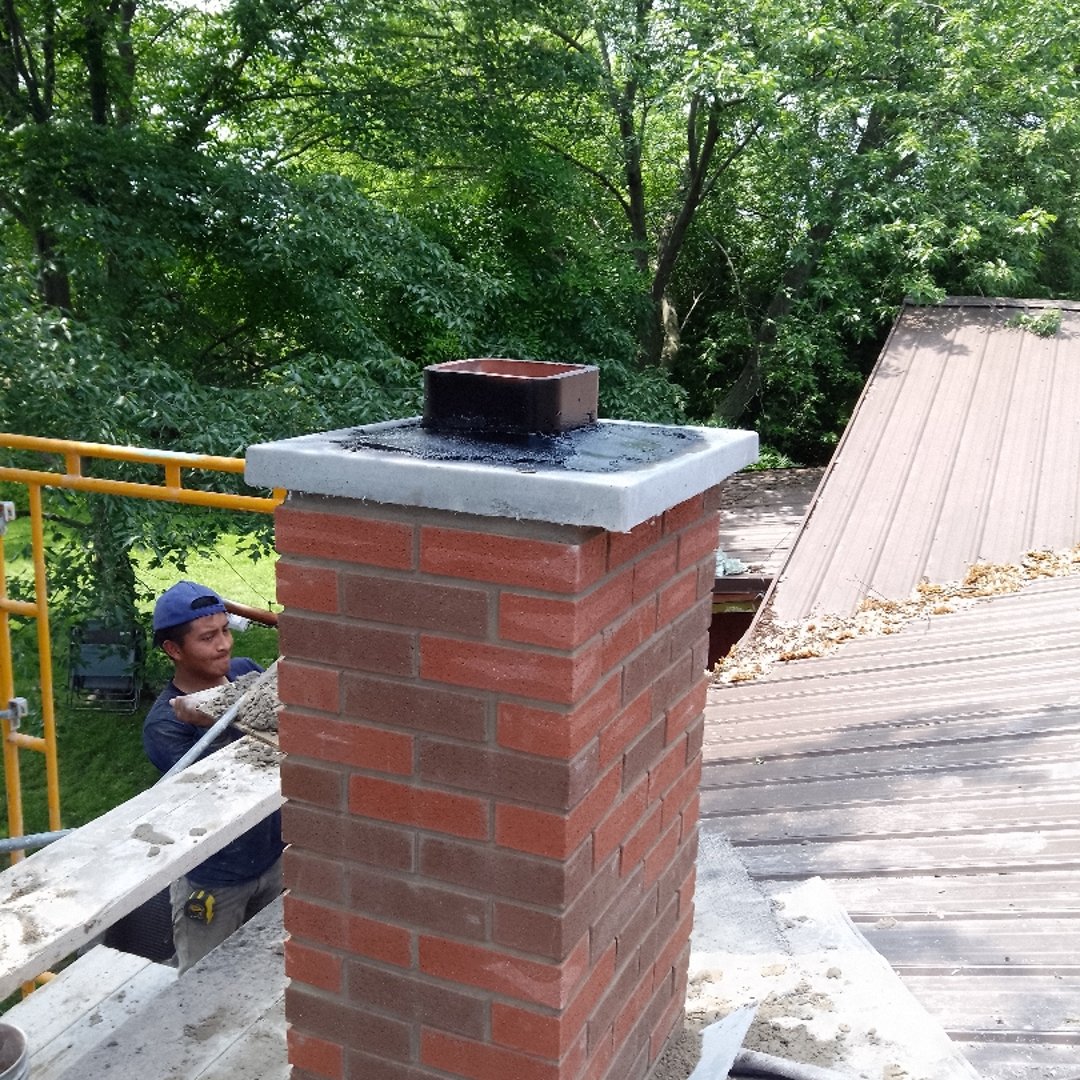
Full rebuild means removing the chimney from foundation level and reconstructing the entire structure. This is necessary when damage extends below the roofline or when there are structural problems.
"I am very happy with Fix My Brick. They did an excellent job replacing our chimney." — Jean Louis B.
Signs you need full rebuild:
- Chimney leaning away from house
- Visible separation between chimney and wall
- Cracks or damage below the roofline
- Damage throughout the full height
- Foundation settlement or movement
- Severe deterioration (more than 40-50% of masonry failing)
A compromised chimney structure isn't just cosmetic—it's a safety issue. Chimneys must be structurally sound to safely vent combustion products. NFPA 211 is clear on this.
Leaning or Separated Chimneys: Don't Wait
If your chimney is visibly leaning, has large gaps between chimney and house, or has loose bricks that could fall—this is urgent. Don't wait for a convenient appointment time.
Leaning indicates foundation failure or structural compromise. This can worsen quickly, especially after heavy rain or freeze-thaw cycles. Loose masonry creates danger for anyone walking below and can damage your roof.
For chimneys with foundation-related issues, you may also need foundation repair work to address the underlying cause of movement.
Material Matching: Will New Brick Look Original?
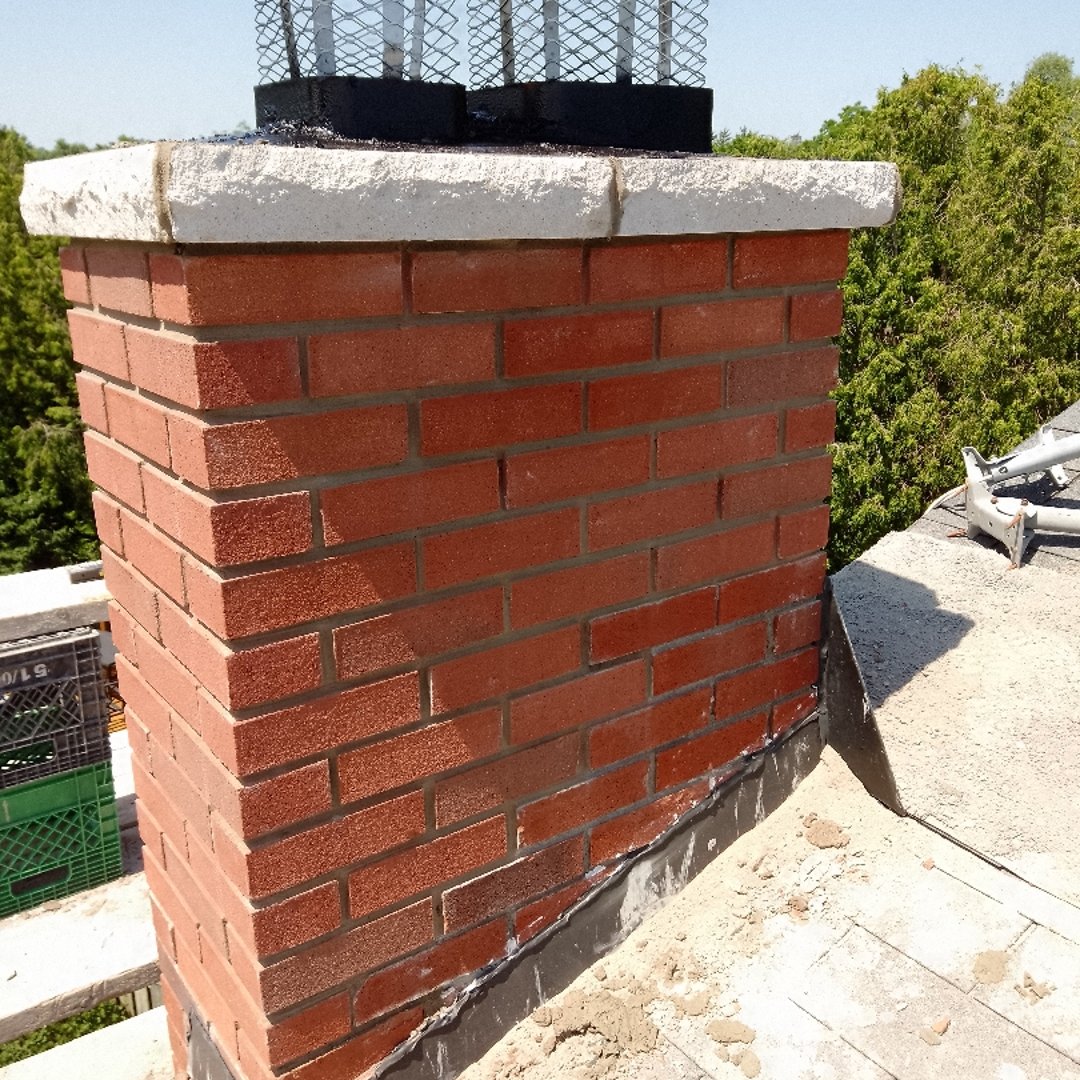
This is the question homeowners ask most about partial or full rebuilds: "Will it look like a patch job?"
"I would highly recommend this company for any repairs. They replaced my entire chimney and you wouldn't even know it was replaced. The bricks matched so well." — Janet D.
What matching involves:
- Sourcing — We look for the closest match in colour, size, and texture. For 80+ year old brick, that often means salvage yards or specialty suppliers.
- Reclaiming — Sometimes we pull brick from below the roofline (where it won't be seen) to use on visible sections.
- Blending — Mixing new and salvaged brick distributes the variation instead of creating a visible line between old and new.
- Mortar matching — Colour comes from sand, lime, and pigments. We test samples before full application.
The reality: exact matches aren't always possible, especially on heritage homes with discontinued brick. But with the right approach, most people can't tell where old ends and new begins.
"Repaired 2 chimneys!!! Thankfully were able to match my brick perfectly! Also repaired foundation stones by the garage with parging, made sure the colour matched well." — Lisa T.
For heritage properties with specific requirements, heritage restoration services include specialized brick sourcing and mortar matching.
What Affects Cost
Every chimney is different, so exact pricing requires an on-site assessment. But here's what drives the scope:
Work type:
- Repair (components only) → Lowest cost
- Partial rebuild (above roofline) → Mid-range
- Full rebuild (entire structure) → Highest cost
Height and access:
- Single-story: Easier access, lower labour
- Two or three-story: Requires scaffolding
- Steep roof pitch: Harder to work safely
Materials:
- Standard brick: Readily available
- Specialty or heritage brick: Harder to source, may cost more
- Mortar type: Standard vs lime mortar for heritage work
Other factors:
- Brick and mortar matching requirements
- Permit fees (for rebuilds)
- Flashing work
- Disposal of old materials
- Complexity of existing structure
Get detailed written quotes that break down scope, materials, timeline, and what's included. This helps you compare accurately and understand why one bid differs from another.
Schedule an assessment to get a clear scope and cost breakdown for your specific situation.
Permits in Ontario
Confusion about permits is common. Here's the straightforward answer:
Repairs (no permit required):
- Crown repair or replacement
- Cap installation
- Tuckpointing and mortar work
- Small brick replacement
- Flashing repairs
Partial rebuild (often requires permit):
- Removing and rebuilding above roofline
- Structural modifications
- Changes to height or footprint
Full rebuild (always requires permit):
- Complete chimney removal and reconstruction
- Any work affecting foundation
- Structural changes to chimney system
Your contractor handles the permit process. Reputable contractors know local building department requirements and ensure work is code-compliant.
Don't skip permits to save money. Unpermitted work can affect home insurance, resale value, and safety. If something goes wrong, you're on the hook.
What Happens If You Ignore It

Chimney damage doesn't stay the same—it escalates. Here's the typical progression:
Stage 1: Initial damage (first 6 months)
Crown cracks appear. Mortar joints start receding. Minor water infiltration begins. This is repair territory.
Stage 2: Water penetration (6-18 months)
Water enters through damaged areas. Freeze-thaw cycles worsen cracks. Mortar deterioration spreads. White staining (efflorescence) appears on the brick face.
Stage 3: Structural spread (1-3 years)
Damage spreads from the initial area. Multiple bricks begin spalling. Mortar failure becomes widespread. Interior water stains appear near the chimney.
Stage 4: Serious deterioration (3-5+ years)
Structural concerns develop—leaning, separation from house. Large sections of masonry failing. Interior water damage worsens. Safety hazards emerge.
This progression happens over 2-3 years for rapidly deteriorating chimneys or 10-15 years for slow decline. Ontario's freeze-thaw cycles accelerate it compared to milder climates.
The cost math: A $500 crown repair today prevents a $5,000 partial rebuild in three years. A $5,000 partial rebuild prevents a $12,000+ full rebuild. Early intervention always wins.
If you suspect water entry is causing problems, the leaking chimney causes guide covers the common sources.
When to Call a Professional
Call immediately (safety concerns):
- Chimney leaning or visibly out of plumb
- Large gaps between chimney and house wall
- Falling or loose bricks
- Large cracks (wider than 1/4 inch)
- Interior water damage near chimney
Schedule within 2-4 weeks:
- Crumbling crown
- Missing or damaged cap
- Widespread mortar deterioration
- Multiple spalling bricks
- Visible cracks in masonry
Plan for this year:
- Minor mortar recession
- Small hairline cracks
- White staining on brick
- Age-related wear on older chimneys (30+ years)
What you can do: Take photos from ground level. Note when you first saw the damage. Track whether it's progressing. Check for interior signs like water stains or musty odours.
What requires a professional: Determining repair vs rebuild. Assessing structural safety. Brick and mortar matching. Understanding permit requirements. The actual work.
Get Your Chimney Assessed
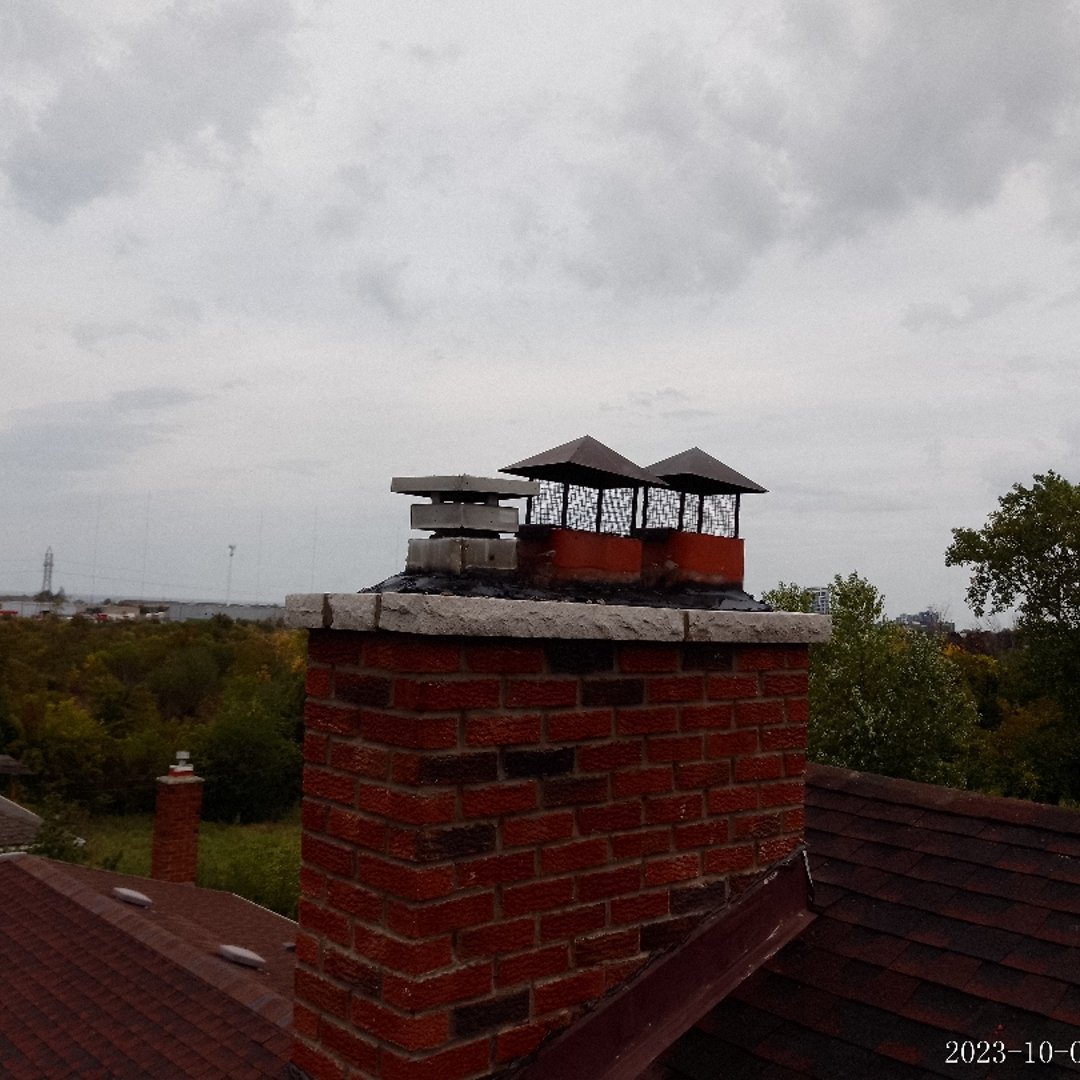
If you're not sure whether your chimney needs repair or rebuilding, don't guess. We'll tell you exactly what it needs and why.
"We are very happy we contacted Fix My Brick. This is a professional company, we received a proper assessment of what needed to be done & a written estimate." — Mira B.
What happens:
- On-site assessment at your convenience
- Clear explanation of what's failing and why
- Written scope: repair vs partial vs full rebuild
- Honest recommendation—no pressure, no upselling
Why homeowners choose us:
- WSIB insured (Ontario contractor requirement)
- In-house crews only—never subcontractors
- 2-year workmanship warranty
- Full cleanup included
- Serving Hamilton, Toronto, Mississauga, and Southern Ontario
Schedule your assessment or call (905) 807-0404.
Need Professional Masonry Services?
Our expert team is ready to help with all your masonry repair and restoration needs across Ontario.