
9 Signs Your Chimney Needs Repair (From Masons Who've Seen It All)
What does chimney damage actually look like? Fix My Brick crews share the warning signs they check on every inspection—based on 1,000+ chimney assessments across Southern Ontario.
On this page
Every week, homeowners across Ontario send us messages like these:

"The top of my chimney has many spalling bricks that need repair."
"I've just had a company inspect my chimney and they quoted an 'emergency' rebuild from the roofline up. I'm looking for a second opinion."
"Looking for a quote on either a repair or removal of a chimney that is leaking."
These are real requests from our inbox. Since 2023, we've quoted over 1,000 chimney repairs across Southern Ontario—Hamilton, Burlington, Oakville, Toronto, Kitchener-Waterloo, Niagara, and beyond. Everything from minor crown seals to full rebuilds. We've seen what fails first, what can wait, and what needs immediate attention.
The honest answer to "is this serious?" depends on what we find. A few hairline cracks at the crown might be a straightforward seal if caught early—or a full rebuild if you wait two more winters for freeze-thaw to finish the job.
This guide shows you exactly what our crews look for on every inspection. Same checklist we use, no fluff.
Key Takeaways
✓ 1,000+ chimney quotes since 2023 taught us what fails first (the crown, almost always)
✓ Cap problems are the single most common issue homeowners notice from the ground
✓ Ontario's freeze-thaw cycles (30-50 per winter) accelerate damage faster than most expect
✓ Matching brick on older homes is possible—we keep salvaged inventory and have matched 100+ year old homes
✓ Most problems develop over 2-3 seasons, giving you time to catch them early
1. Deteriorating Chimney Crown

The crown—the concrete slab at the very top—takes the worst beating. We replace or repair deteriorated crowns almost every week.
What we actually look for:
- Hairline cracks — Water gets in, freezes overnight, expands. One winter can turn a hairline into a chunk missing.
- Edge erosion — If the crown doesn't overhang the brick by at least 2", water runs straight down the masonry.
- Soft spots — Tap it. If the concrete feels sandy or crumbles under your finger, it's already failing.
We recently got this message: "The masonry around the chimney cap is crumbling—could you have a look?" By the time we got there, water had been seeping behind the top row of bricks for at least two seasons. Early inspection would have saved a more extensive repair.
The crown is especially vulnerable in Ontario because freeze-thaw cycles—water penetrating tiny cracks, freezing overnight, expanding—repeat 30-50 times each winter.
2. Crumbling or Missing Mortar Joints
Mortar fails before brick—every time. In Ontario, we usually see joints start to go around the 20-25 year mark, sometimes faster on the side facing prevailing wind.
What we look for:
- Fingernail test — If you can scratch mortar out with your thumbnail, it's failing. Healthy mortar is hard.
- Shadow lines — Mortar recessed more than 1/4" behind the brick face means water's been getting in for years.
- Gaps at the cap — The top two courses go first. If there's daylight between bricks, water's already inside.
One recent lead said: "Mortar is crumbling on chimney. Several bricks are loose." By the time it's that obvious, you're usually looking at a partial rebuild rather than just tuckpointing.
3. Damaged or Missing Chimney Cap

The cap keeps rain out, prevents animal entry, stops debris from falling in, and reduces downdrafts. A missing or damaged cap creates a direct pathway for water damage.
Signs of cap failure:
- Cap is visibly rusted, bent, or corroded
- Cap is missing entirely
- Spark arrestor mesh is torn or collapsed
- Cap doesn't sit flush or is wobbling
Cap damage is the single most common issue homeowners notice from the ground—it's visible without a ladder. In Ontario, birds and raccoons frequently nest in chimneys without caps, creating safety and fire hazards.
A properly fitted chimney cap costs far less than the water damage it prevents.
4. Spalling Brick (Flaking Faces)
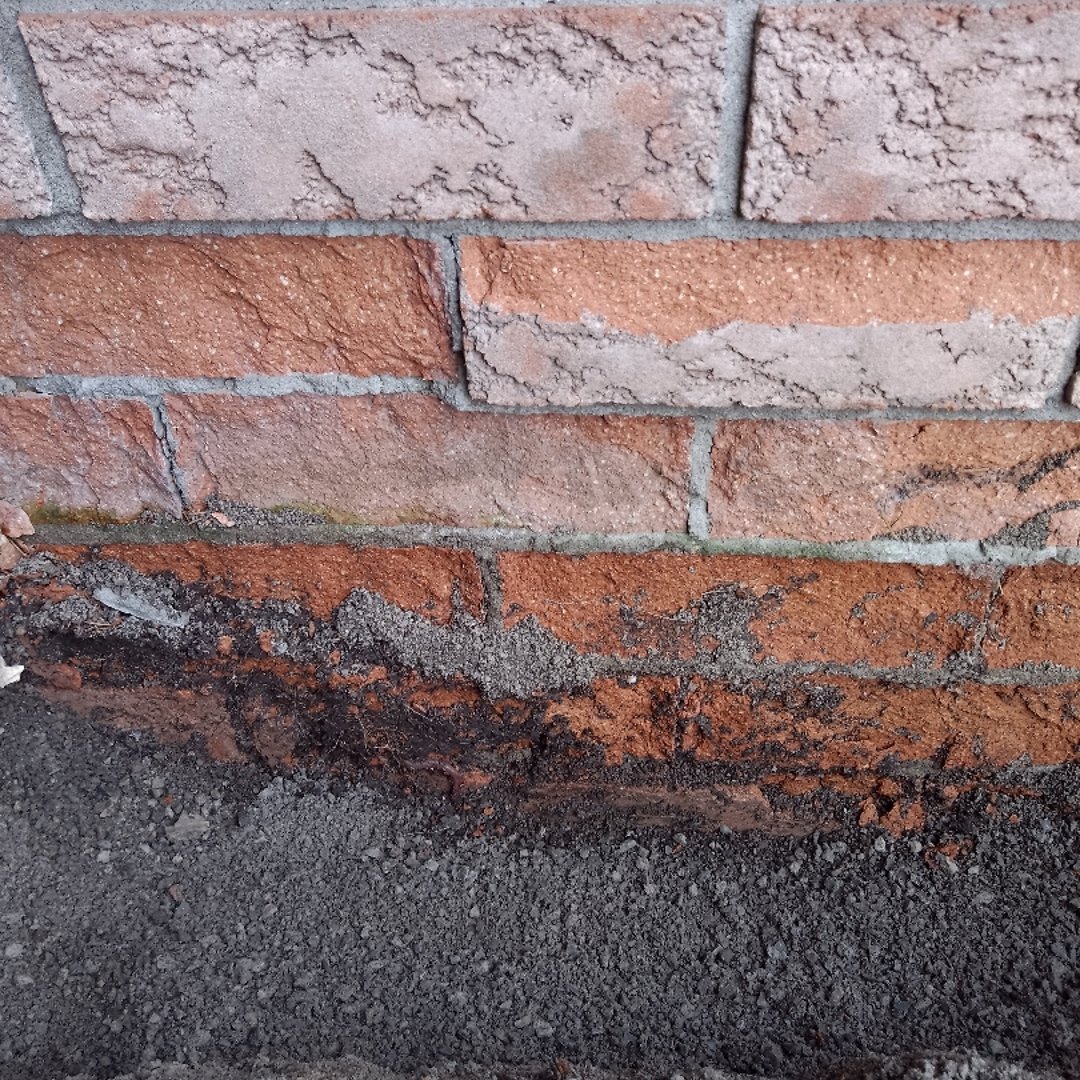
Spalling is when the face of the brick flakes or pops off, leaving rough, exposed surfaces. It's caused by water getting inside the brick and freezing.
What we look for:
- Brick faces that look "eaten away" or pitted
- Chunks of brick on your roof or in your gutters
- Exposed orange/red interior where the face used to be
One customer told us: "Top two rows of chimney. Several bricks are starting to crumble. Rest of Chimney is good." This is classic spalling—the top courses get the most weather exposure and fail first.
If caught early (1-2 bricks), we can replace them. Once spalling spreads to a whole section, you're looking at a rebuild from the roofline up.
5. Visible Cracks in the Chimney Structure
Not all cracks are equal. Some are cosmetic; others signal structural problems.
Crack patterns that concern us:
- Horizontal cracks — Often indicate freeze-thaw damage. Water gets in, freezes, pushes the brick outward.
- Stair-step cracks — Follow the mortar joints in a zigzag pattern. Usually indicates settling or movement.
- Vertical cracks through bricks — More serious. The brick itself is splitting, not just the mortar.
- Cracks wider than 1/4" — Require immediate professional assessment.
If you can fit a pencil in the crack, call someone. If you can fit a finger, call today.
6. White Staining (Efflorescence)
That white, chalky buildup on your chimney isn't paint or mould—it's efflorescence. It happens when water moves through the masonry, dissolves salts inside, and deposits them on the surface as it evaporates.
What it means:
- Water is getting into your chimney somewhere
- The moisture has been present long enough to migrate through the brick
- The underlying problem needs attention (even if the staining looks minor)
Efflorescence itself isn't structural damage—but it's a symptom. Fix the water source, and it stops. Ignore it, and the water keeps doing damage inside.
7. Water Stains or Leaks Inside Your Home
If you see water damage near your chimney inside the house, the chimney has likely been leaking for some time.
We get messages like: "Need a quote on possibly a full chimney rebuild. This is my father-in-law's house and he has water damage in his house."
Common interior signs:
- Water stains or rings on drywall or ceiling near the chimney
- Stains that appear or worsen during rain
- Damp spots or moisture on interior surfaces
- Peeling paint or wallpaper near the chimney
The leak path could be through the crown, cap, flashing, or deteriorated mortar. Finding the source requires inspecting all of these.
8. Damaged or Failing Flashing
Flashing is the metal that seals where your chimney meets the roof. When it fails, water runs straight into your attic.
Signs of flashing failure:
- Visible gaps between flashing and chimney
- Rusted, corroded, or bent metal
- Flashing pulling away from the roof or chimney
- Water in your attic near the chimney
One customer told us: "Very happy with our chimney and flashing that was done!" — Michelle A. Flashing problems often require coordination between a mason and roofer, which is why we handle both.
9. Leaning or Tilting Chimney
A chimney that leans or appears to separate from your house is a serious structural concern. This can indicate foundation movement, severe mortar deterioration, or long-term water damage.
Take immediate action if:
- The chimney visibly leans away from the house
- There's a gap between the chimney and the wall
- The top of the chimney doesn't align with the base
- The lean is getting worse
This isn't a "wait and see" situation. Structural movement affects your home's safety.
When to Call vs. When to Monitor
Call immediately:
- Visible leaning or separation
- Large cracks (wider than 1/4")
- Falling bricks or loose masonry
- Active water leaks during rain
- Strong odours (creosote, mould, or gas)
Schedule inspection soon (within 2 weeks):
- Crumbling mortar joints
- Spalling brick
- Missing or damaged cap
- Water stains on interior walls
Monitor and plan for repair:
- Minor efflorescence
- Small hairline cracks
- Slightly recessed mortar
Ontario-Specific: When to Inspect
Ontario's weather makes regular inspections especially important. The TSSA (Technical Standards and Safety Authority) recommends annual inspections.
Best timing:
- September-October: Before heating season
- April-May: After winter (reveals freeze-thaw damage)
- After severe storms: Check for weather damage
Most chimney problems develop over 2-3 seasons—you usually have time to catch them before they become expensive.
What Our Customers Say
"Ryan and Polo did an incredible job with our chimney today!! They matched our brick perfectly, you can't even tell where the old part ends and the new part starts." — Bridget C.
"Repaired 2 chimneys!!! Thankfully were able to match my brick perfectly! Clean, polite and great workers." — Lisa T.
"Luke & Fabiano arrived on time, introduced themselves, informed us as to what was going to be done to chimney. Set up their equipment & started work immediately." — Roslyn F.
"I am very happy with Fix My Brick. They did an excellent job replacing our chimney." — Jean Louis B.
Get Expert Help
If you've noticed any of these signs, don't wait for problems to worsen. Our in-house crews—never subcontractors—provide chimney inspections and repairs throughout Southern Ontario, backed by our 2-year workmanship warranty.
Whether you need a second opinion on another company's quote or want to understand your repair vs. removal options, we'll give you an honest assessment.
Next steps:
- Learn about Chimney Repair Services and rebuilding options
- Request a Free Assessment or call (905) 807-0404
Need Professional Masonry Services?
Our expert team is ready to help with all your masonry repair and restoration needs across Ontario.