
Foundation Crack Types: A Mason's Guide to What You're Really Looking At
As a mason who's assessed hundreds of foundation cracks across Southern Ontario, I'll walk you through what each type means, what we can fix, and when you need a structural engineer instead.
On this page
Found a crack in your basement foundation? I get that call about three times a week.
Here's the truth most contractors won't tell you upfront: not every foundation crack needs a $15,000 repair, and not every crack is something a mason can fix. Some are cosmetic settling you can safely monitor. Some need block repair or parging we can handle. And some—horizontal cracks, serious bowing walls—need a structural engineer, not a mason.
I'm James, and I've been assessing foundation issues across Hamilton, Toronto, and the GTA for over 15 years. This guide walks you through exactly what I look for when I show up at your house with a flashlight and a quarter (my quick width test). You'll learn which cracks are urgent, which you can monitor, what masonry contractors like us actually fix, and when you need to call a foundation specialist instead.
What you'll learn:
- How to identify crack types by direction and width (the 1/4-inch rule)
- What masons handle vs what needs a foundation engineer
- Which cracks can wait and which can't
- Real examples from jobs across Southern Ontario
The 1/4-Inch Rule (My Quick Triage Test)
When I show up for an assessment, the first thing I do is pull out a quarter. If the edge of the quarter fits into the crack, it's wide enough to warrant attention. Narrower than that—and vertical or diagonal—usually means cosmetic unless there's water or wall movement.
🚨 Call Someone This Week
- Any horizontal crack (indicates lateral pressure on the wall)
- Any crack wider than 1/4 inch with wall bowing (structural movement)
- Active water flowing through the crack (especially during rain or spring thaw)
- Stair-step cracks in block foundations with displaced blocks
- Doors or windows suddenly sticking (foundation shifting)
→ These usually need a foundation specialist, not just a mason.
⚠️ Schedule Assessment Within 1-2 Months
- Vertical or diagonal crack between 1/8" and 1/4" wide
- Crack that's grown noticeably over the past year
- Multiple small cracks in the same area
- Old water staining around the crack (even if currently dry)
- Block foundation with deteriorating mortar joints
→ These might be mason-fixable (block repair, parging, crack sealing) or might need engineering—worth an assessment.
👁️ Monitor Yourself for 6-12 Months
- Hairline cracks (less than 1/8" wide) in homes under 2 years old
- Thin vertical cracks with no water, no movement, no bowing
- Stable cracks that haven't changed in years
- Cracks in areas with no moisture or structural stress
→ Take photos with a ruler every 3 months. If nothing changes, you're fine.
What Masons Fix vs What Needs a Foundation Specialist
This is where honest contractors separate from the ones trying to sell you work they can't do (or sell you an engineer when you just need mortar).
What We Handle (Masonry Foundation Repairs)
| Issue | What We Do |
|---|---|
| Deteriorating block foundations | Repoint mortar joints, replace damaged blocks, match mortar colour |
| Failing parging | Repair or replace parging on foundation walls (the cement coating on the exterior) |
| Minor crack sealing | Seal cosmetic cracks in brick or block to prevent water entry |
| Stone foundation repair | Repoint stone foundations, replace damaged stones (common in heritage homes) |
| Cosmetic surface repairs | Fix spalling, surface deterioration, minor water stains |
Real example: Last fall we repaired a 1950s block foundation in Hamilton's Durand neighbourhood. The mortar joints were deteriorating, letting water in. We repointed the blocks, sealed a few vertical cracks, and repaired the parging. Total cost: around $2,200. Homeowner tried to monitor it himself for two years—smart call, because it wasn't getting worse fast enough to panic.
What Needs a Foundation Specialist (Structural Engineering)
| Issue | Who Handles It |
|---|---|
| Underpinning / foundation piers | Foundation engineer |
| Bowing walls with structural reinforcement | Foundation specialist (carbon fiber, I-beams, wall anchors) |
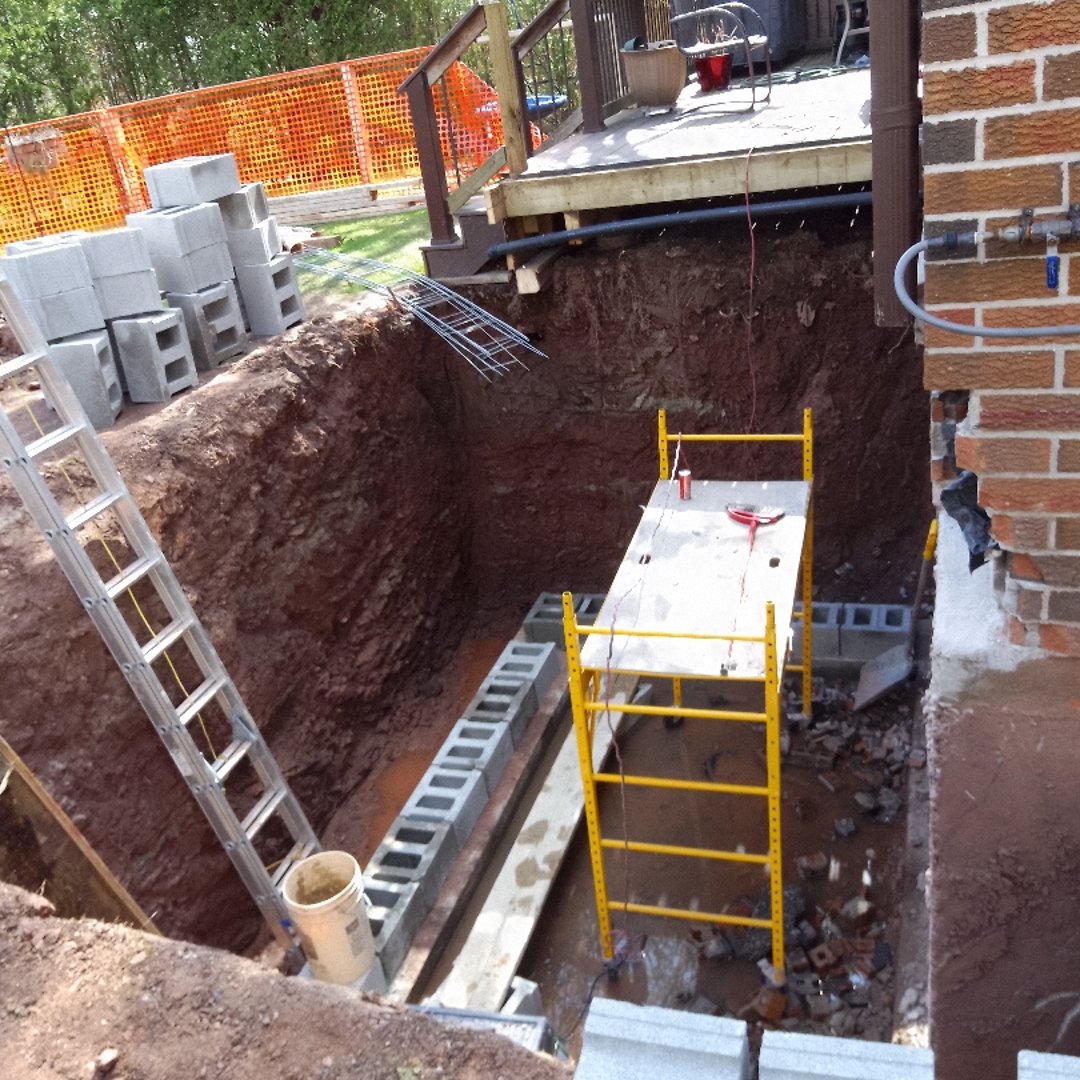
| Full below-grade waterproofing | Waterproofing contractor (excavation, membranes, weeping tile) |
| Major settlement issues | Structural engineer + foundation contractor |
| Horizontal cracks with active wall movement | Foundation specialist (not cosmetic—needs stabilization) |
Real example: Two years ago I assessed a 1980s home in Mississauga with a horizontal crack and the wall bowing 2 inches inward. I told the homeowner straight up: "This isn't something I can fix—you need a foundation engineer to stabilize that wall before it fails." They called a specialist, got carbon fiber straps installed, cost them about $8,000. If I'd tried to just seal the crack? It would've failed within months.
When You Need Both
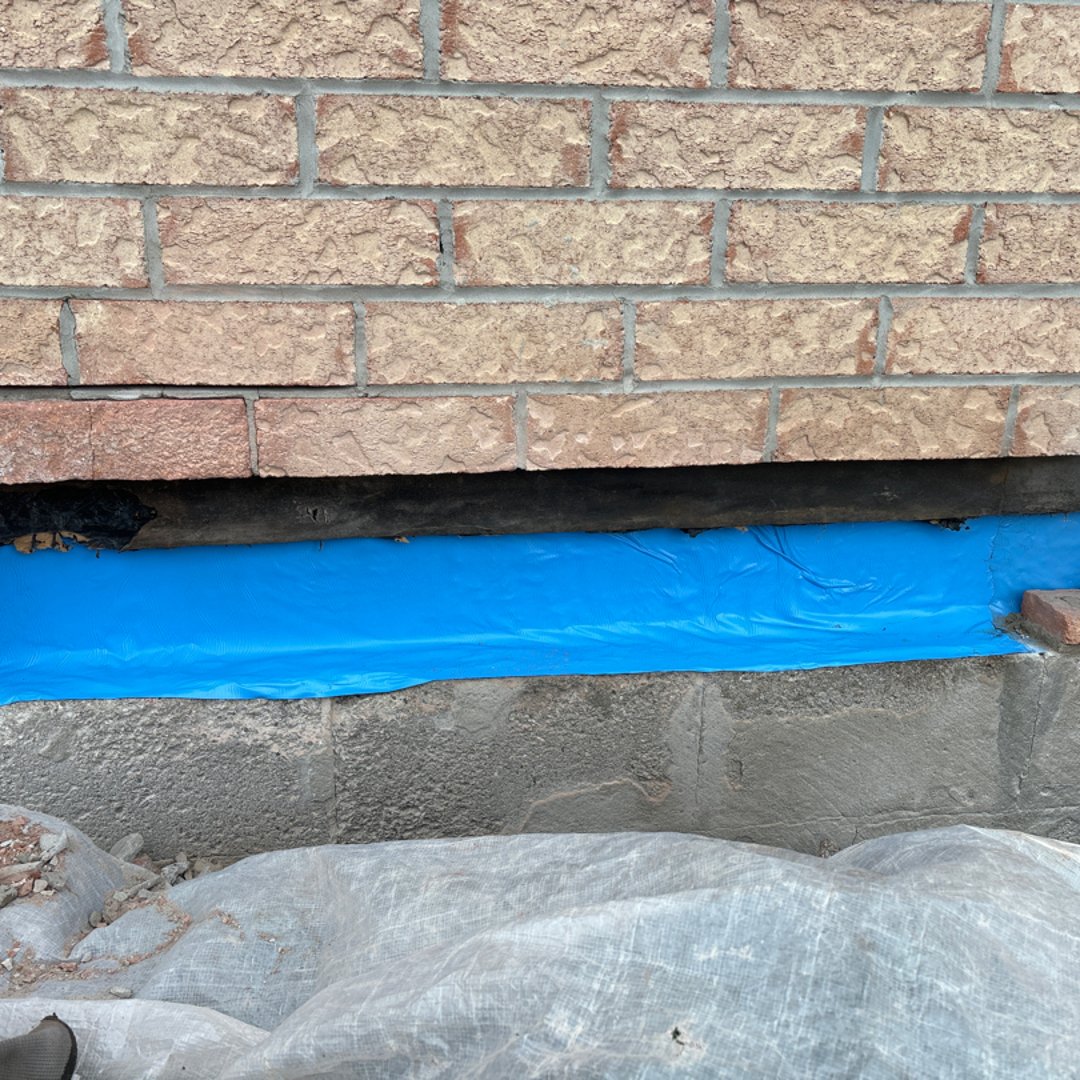
Sometimes you need a foundation specialist for the structural work, then a mason for the cosmetic finish. Example: foundation gets underpinned and stabilized (engineer), then we come in to repoint the blocks and repair parging (mason).
8 Common Foundation Crack Types (From Most to Least Serious)
Here's what I look for when I'm in your basement with my flashlight.
1. Horizontal Cracks (Call a Specialist)
What they look like: Cracks running sideways across the wall, often at or just below grade level.
What causes them: Lateral pressure from saturated soil, freeze-thaw expansion, or unbalanced backfill pushing against the wall.
Why it matters: These are structural. The wall is under stress. If it's bowing inward—even slightly—it can fail.
What to do: Call a foundation specialist (not a mason). They'll assess if you need wall reinforcement, grading fixes, or drainage work. Don't wait—I've seen horizontal cracks turn into $15,000+ rebuilds when people monitor them for "just one more year."
Can we fix it? No. We can seal cosmetic cracks, but horizontal cracks with wall movement need engineering.
2. Diagonal Cracks (Assessment Needed)
What they look like: Cracks running at an angle (30-75 degrees from vertical), often wider at one end.
What causes them: Differential settlement—one part of the foundation settling faster than another. Common in Ontario clay soils (Mississauga, Brampton, parts of Toronto).
Why it matters: These can be cosmetic or structural depending on width, growth rate, and whether the wall is moving.
What to do:
- Narrower than 1/4" and stable: Take photos, monitor every 3 months.
- Wider than 1/4" or growing: Get an assessment. Might need foundation piers (specialist) or might just need crack sealing (mason).
Real example: Last spring I looked at a diagonal crack in a 2000s home in Oakville. Crack was 1/8" wide, hadn't grown in a year, no moisture. I told them to monitor it. Six months later, still stable—no repair needed. Saved them money and worry.
3. Stair-Step Cracks in Block Foundations (We Can Fix These)
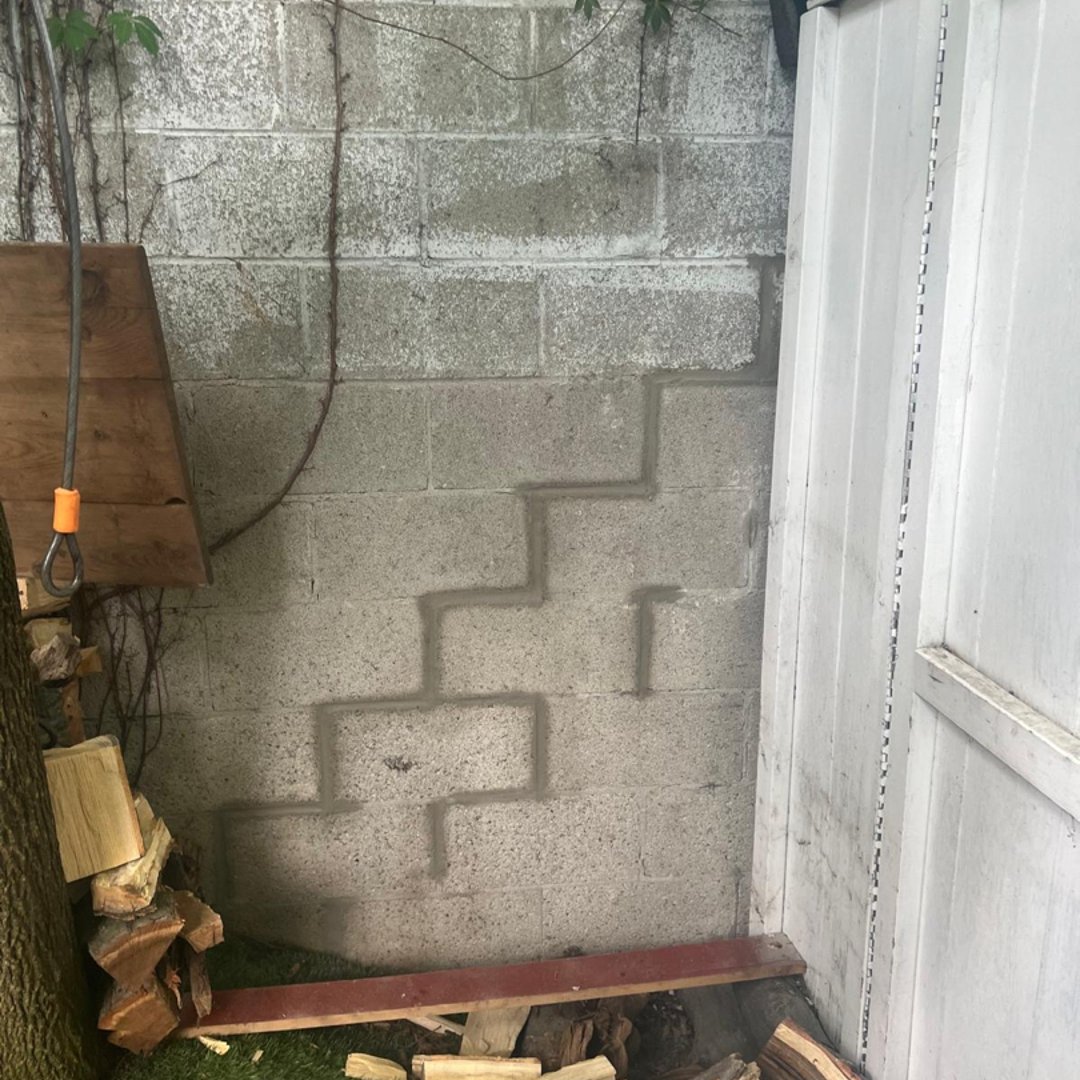
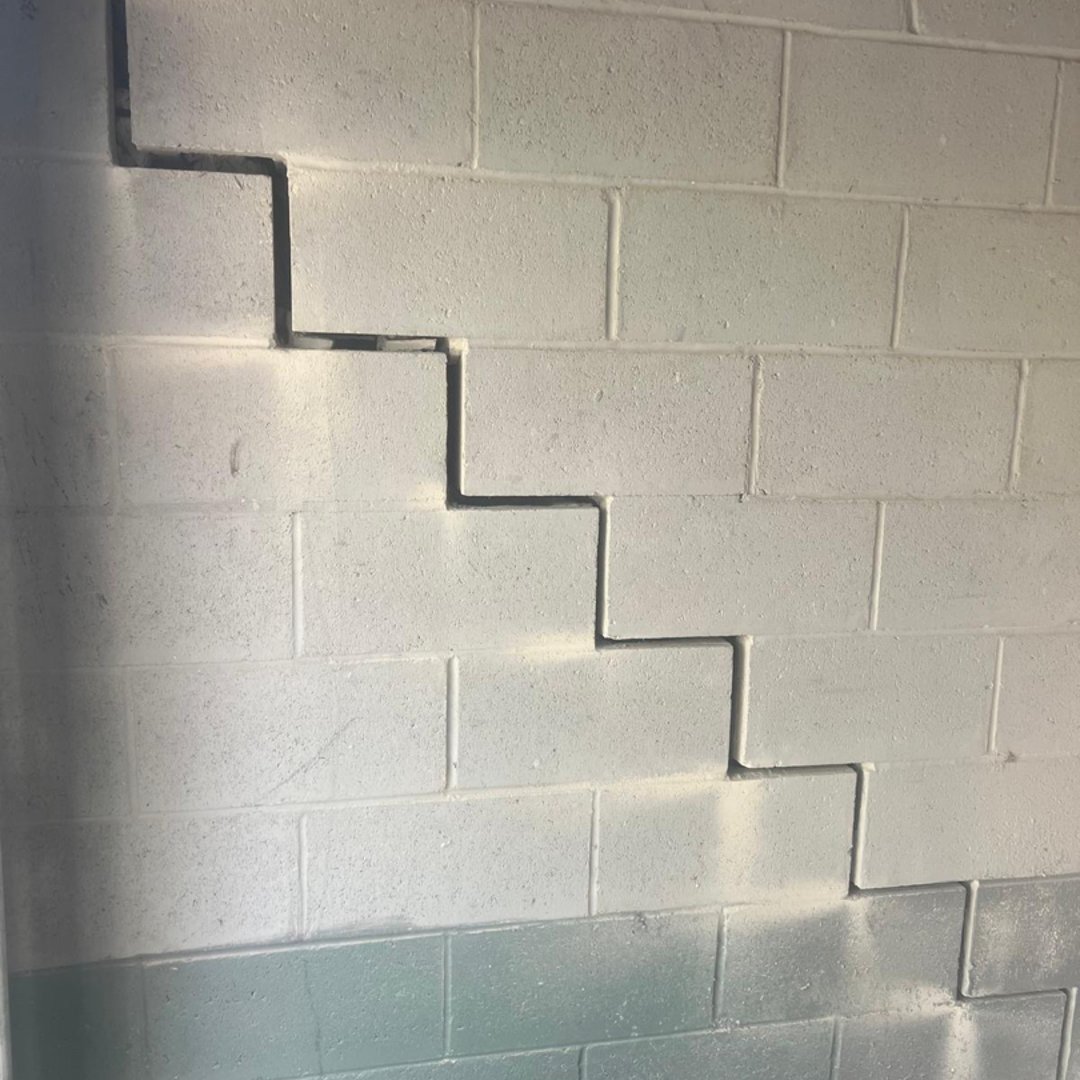
What they look like: Cracks following the mortar joints between concrete blocks, creating a stair-step pattern.
What causes them: Settlement in one area, moisture deteriorating mortar joints, or freeze-thaw damage (mortar fails before block).
Why it matters: If the mortar is failing but the blocks aren't cracked or displaced, this is a mason-fixable issue. If blocks are separating or cracking, you might need structural assessment.
What we do: Repoint the mortar joints (remove old mortar, replace with new, colour-matched mix). If blocks are damaged, we replace them.
Real example: We repointed a 1960s block foundation in Burlington last year—stair-step cracks all along the north wall. Turned out the mortar had deteriorated from 50+ years of freeze-thaw. We repointed it, sealed a few cracks, cost about $3,200. Foundation is solid, just needed mortar refresh.
Can we fix it? Yes, if it's mortar deterioration. No, if blocks are separating due to settlement (that needs engineering).
4. Vertical Cracks (Usually Cosmetic, But Context Matters)
What they look like: Cracks running straight up and down on poured concrete foundation walls.
What causes them: Concrete curing (moisture loss during drying), minor settling, temperature changes.
Why it matters: Most vertical cracks are NOT structural threats. But if the crack is wider at top or bottom (differential settlement), leaking water, or wider than 1/4 inch, it moves from "cosmetic" to "needs assessment."
What to do:
- Hairline (less than 1/8") in a new home: Monitor for 6-12 months. Likely cosmetic.
- 1/8" to 1/4" wide: Photo it, check every 3 months. If it grows or gets wet, call someone.
- Wider than 1/4" or leaking: Get it assessed.
Can we fix it? Yes, for cosmetic sealing to prevent water entry. No, if there's structural movement causing the crack.
5. Hairline Cracks (Monitor, Don't Panic)
What they look like: Very thin cracks (less than 1/8" wide), often barely visible, usually vertical.
What causes them: Concrete shrinkage as it cures (especially in first 1-2 years), temperature changes during drying.
Why it matters: These are almost always cosmetic. Main risk is water or radon gas entry.
What to do:
- New home (under 2 years): Contact builder—might be covered under warranty.
- Older home: Take a photo, mark ends with date. If stable for 6-12 months, it's fine.
- If it gets wet or widens: Move to "schedule assessment."
Can we fix it? We can seal it if you're worried about water or radon, but often it's not necessary.
6. Shrinkage Cracks (Cosmetic)
What they look like: Narrow vertical cracks in poured concrete, typically appearing within the first year after pour.
What causes them: Wet concrete mix losing moisture as it dries. Hot, dry conditions during curing speed this up.
Why it matters: Minimal structural threat, but can allow radon or minor water seepage.
What to do: Monitor for stability. If radon is a concern in your area (parts of Ontario are radon-prone), consider sealing.
Can we fix it? Yes, we can seal it. But most don't need sealing unless moisture becomes an issue.
7. Foundation Slab Cracks (Basement Floor)
What they look like: Cracks in the concrete basement floor, not the walls.
What causes them: Concrete curing, poor soil compaction before pour, or frost heave under the slab.
Why it matters: Most are cosmetic unless one side is higher than the other (vertical displacement = settlement problem) or water is seeping up.
What to do:
- Hairline with no height difference: Cosmetic, monitor.
- Crack with vertical offset or water: Call a foundation expert—might indicate soil/drainage issues.
Can we fix it? We can seal surface cracks. Major settlement or heaving needs foundation specialist.
8. Deteriorating Parging (We Fix This All the Time)
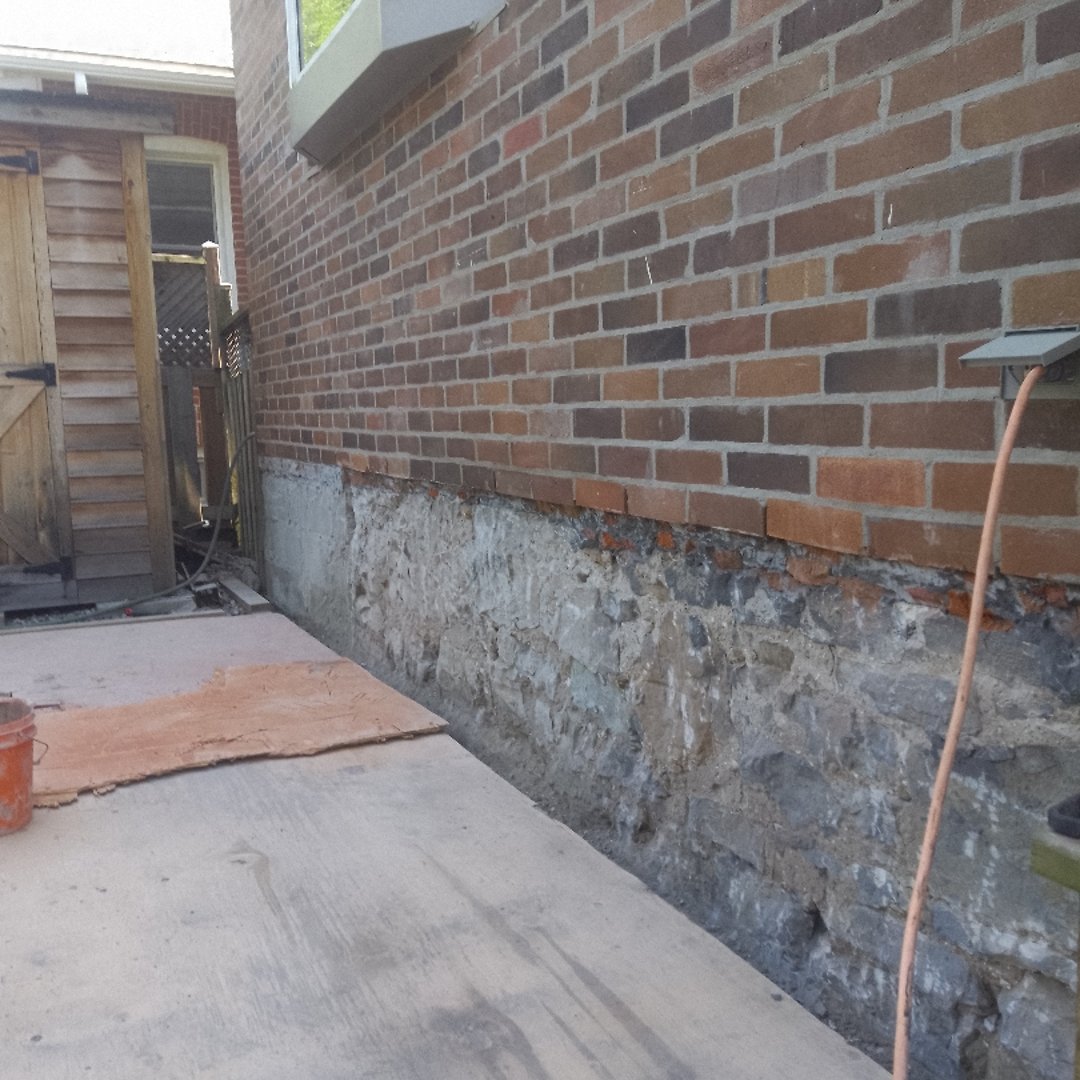
What it looks like: The cement coating on the exterior foundation is cracking, flaking, or falling off in chunks.
What causes it: Age, freeze-thaw damage, poor original application, or water infiltration behind the parging.
Why it matters: Parging protects the foundation blocks from moisture and freeze-thaw. When it fails, water gets behind it and deteriorates the blocks.
What we do: Remove failed parging, prep the surface, apply new parging with proper drainage behind it. We colour-match if needed.
Real example: We reparged a 2004 home in Brampton last summer—about 30% of the foundation parging had failed. Homeowner caught it early before the blocks underneath got damaged. Cost about $4,800 for the full repair. If they'd waited another two years, the blocks would've needed repointing too.
Can we fix it? Yes. This is core masonry work.
What Happens During a Foundation Assessment (What I'm Actually Looking For)

When you call us for an assessment, here's what I do:
- Exterior inspection - Check grading, downspouts, drainage, soil conditions, parging condition
- Interior inspection - Look at all basement walls, floors, corners, window wells
- Crack measurement - Pull out my quarter, measure width, note length and direction
- Moisture check - Look for water staining, efflorescence (white mineral deposits), active leaks, dampness
- Wall movement check - Look for bowing, bulging, sticking doors/windows, floor level changes
- Photos - Document everything so you can see what I'm seeing
- Honest assessment - Tell you if it's mason-fixable, needs a specialist, or is fine to monitor
Questions I'll answer:
- "Is this crack active (growing) or stable?"
- "What's causing it?"
- "Can you guys fix this, or do I need a foundation engineer?"
- "What happens if I wait 6 months vs doing it now?"
Red flags if a contractor:
- Diagnoses everything as "emergency" without explaining why
- Pushes for immediate decision without written estimate
- Can't explain what's causing the crack
- Won't provide insurance/WSIB proof or references
What Happens If You Ignore Foundation Cracks (Real Timelines)
Cosmetic cracks stay cosmetic. I've seen hairline vertical cracks in 40-year-old homes that never got worse.
Active structural cracks get exponentially worse. Here's what I've seen:
Horizontal Crack (1/4" wide, untreated)
- 6 months: Crack widens to 1/2", wall bows inward 1-2 inches
- 1 year: Water intrusion during spring thaw, crack widens further from freeze expansion
- 2-3 years: Wall needs stabilization (specialist work), cost jumps from $2,000 sealing to $8,000+ reinforcement
Diagonal Crack from Settlement (1/4" wide, active)
- 6 months: Crack grows to 3/8", doors start sticking
- 1 year: More cracks appear, foundation continues settling
- 2-3 years: May need foundation piers or underpinning—major expense
Vertical Crack with Water Seepage (1/8" wide, damp)
- 6 months: Water enters during spring, dampness appears inside
- 1 year: Mold growth on nearby drywall, musty smell
- 2-3 years: Crack has widened from freeze-thaw, blocks around it start deteriorating
Failing Parging (Cosmetic at First)
- 6 months: More parging flakes off, water starts getting behind coating
- 1 year: Blocks underneath start deteriorating from moisture
- 2-3 years: Now you need block repair + parging = 2x the cost
The takeaway: Early assessment costs you nothing and prevents guesswork. Waiting on the wrong crack turns a $1,500 repair into a $10,000+ problem.
Ontario-Specific Foundation Issues (What I See Across the GTA)
Freeze-Thaw Cycles (The Big Enemy)
Ontario Building Code requires foundations at least 4'6" below grade to get below the frost line. But prolonged freezing still causes soil to expand and push against walls. Spring thaw brings water infiltration, which freezes again inside cracks—widening them. I see this every year.
Clay Soils (Mississauga, Brampton, Parts of Toronto)
Clay swells when wet (spring), shrinks when dry (summer/fall). This causes differential settlement—one part of the foundation sinks faster than another. Vertical and diagonal cracks are telltale signs. We've repaired dozens of settlement cracks in 1990s-2000s subdivisions in Erin Mills, Heartland, and Bramalea where clay wasn't properly compacted during construction.
High Water Table (Toronto Low-Lying Areas)
Beaches, Leslieville, parts of the waterfront—high water table means hydrostatic pressure pushing water against foundation walls. This is why we see more horizontal cracks and water infiltration than settlement issues in these neighbourhoods.
De-Icing Salts (Garage Entrances, Driveways)
Salt from driveways runs toward foundations and accelerates concrete deterioration. We see surface spalling and parging failures around garage entrances all the time. If your driveway slopes toward your house, this is probably affecting your foundation.
Older Construction (Pre-1970s Block Foundations)
Many Ontario homes built before the 1970s have concrete block foundations (not poured concrete). These are more vulnerable to stair-step cracks, mortar deterioration, and moisture infiltration. We do a lot of block foundation repointing in Hamilton's heritage neighbourhoods (Durand, Kirkendall) and older Toronto areas.
How to Monitor Foundation Cracks Yourself
If you've determined a crack is in the "monitor" category, here's how to track it:
Photos:
- Close-up with ruler or quarter for scale (shows width)
- Full wall view for context
- Note date, location (e.g., "North wall, 3 feet from floor, east corner")
- Take new photos every 3 months or after major weather (heavy rain, spring thaw)
Markings:
- Draw lines at crack ends with pencil, write date
- Check every 3 months—did the crack extend past your marks?
Crack Gauges:
- Buy plastic crack monitors at hardware stores (about $15)
- They attach across the crack and show if it's widening, closing, or shifting
- Helpful for long-term monitoring
When to Upgrade from Monitoring to Assessment:
- Crack widens noticeably (e.g., from hairline to 1/8")
- Moisture or water staining appears
- New cracks develop nearby
- Doors or windows start sticking
- Wall appears to be bowing
Frequently Asked Questions
Can a mason fix all foundation cracks?
No. Masons handle block foundation repairs, parging, and minor crack sealing. Structural issues like horizontal cracks with bowing walls, major underpinning, or full waterproofing systems need a foundation engineer or structural specialist. We'll tell you honestly which category your crack falls into.
What foundation work does Fix My Brick actually do?
We handle masonry foundation repairs: repointing deteriorated block foundations, repairing or replacing parging, sealing minor cracks in brick or block, and matching mortar on stone foundations. We don't do underpinning, foundation piers, carbon fiber reinforcement, or full below-grade waterproofing—those need specialists.
How do I know if a foundation crack is structural?
Horizontal cracks, cracks wider than 1/4 inch with wall movement, or active water gushing through are structural. Most vertical hairline cracks are cosmetic. When I show up for an assessment, I'm looking at crack direction, width, wall movement, and moisture—then I'll tell you if it's something we can handle or if you need an engineer.
Are hairline cracks in foundation normal?
Yes, especially in homes under 2 years old. Hairline vertical cracks (less than 1/8 inch) are typically from concrete curing. Monitor them—if they stay dry and don't widen, they're cosmetic. If moisture appears or the crack grows, get it assessed.
What's the difference between a mason and a foundation specialist?
Masons repair the masonry itself—blocks, mortar, parging, brick. Foundation specialists handle structural engineering issues like underpinning failing foundations, installing drainage systems, and reinforcing bowing walls. Some issues need both: we fix the block foundation, they handle the grading and drainage.
Can foundation cracks cause water damage and mold?
Yes. Even small cracks let water in during spring thaw or heavy rain. That moisture creates mold, damages stored items, and rusts out mechanicals. In Ontario, water in cracks freezes and expands, widening the crack. If you see dampness or smell must, seal it before next winter.
What causes foundation cracks in Ontario homes specifically?
Freeze-thaw is the big one. Soil freezes, expands, and pushes against walls. Clay soils (common in Mississauga, Brampton, parts of Toronto) swell when wet and shrink when dry, causing settlement. Spring snowmelt creates hydrostatic pressure. De-icing salts also accelerate deterioration around garage entrances.
Should I get multiple opinions on foundation repairs?
Absolutely, especially if someone's quoting $5,000+. Get 2-3 assessments. Be wary of anyone who says everything is an emergency without explaining why, or who can't show you exactly what's causing the crack. A good contractor explains the problem and gives you options.
How fast do foundation cracks grow?
Depends on the cause. Stable cracks from old settling might not move for decades. Active cracks from ongoing pressure or freeze-thaw can widen noticeably in one season. That's why I recommend photos with a ruler every 3 months—you'll see if it's stable or active.
When should I call someone about a foundation crack?
Call this week if it's horizontal, wider than a quarter, actively leaking, or you see wall movement. Schedule within a month or two if it's between 1/8 and 1/4 inch wide, growing, or has old water stains. Monitor yourself if it's hairline, vertical, dry, and stable for 6+ months.
Do you need to be home for a foundation assessment?
Not necessarily. We need access to the basement and the exterior foundation perimeter. If we can get in and you've left us notes about where the cracks are, we can assess and email you a report with photos. Most people like to be there to ask questions though.
What happens if I ignore a foundation crack?
Cosmetic cracks stay cosmetic. Active structural cracks get exponentially worse and more expensive. I've seen homeowners turn $1,500 block repairs into $10,000+ foundation rebuilds by waiting two years. Early assessment costs nothing and prevents guesswork.
Next Steps: Free Foundation Assessment
What we'll tell you honestly:
- "This is cosmetic—you're fine to monitor it"
- "This is masonry work we can handle—here's what it'll cost"
- "This needs a foundation engineer—here's why"
What happens during our assessment:
- Free on-site inspection (no obligation)
- Interior and exterior evaluation
- Clear explanation of what's causing the crack
- Written estimate if repair is needed
- Honest advice on urgency—we'll tell you if monitoring is safe
Ready to get answers? Book a free foundation crack assessment across Hamilton, Toronto, Mississauga, Burlington, Oakville, and Southern Ontario.
Learn more about foundation masonry services and what to expect from a professional assessment.
Need Professional Masonry Services?
Our expert team is ready to help with all your masonry repair and restoration needs across Ontario.