
Why Is My Chimney Leaking? 5 Entry Points to Check
Water stains near the chimney? The stain isn't where the water got in. Learn the 5 common entry points and how to trace the real source.
On this page
The stain on your ceiling isn't where the water got in.

That's the first thing homeowners get wrong about chimney leaks. You see a brown ring spreading near the fireplace, so you assume water's coming through there. But chimneys leak from the top—cap, crown, flashing—and water travels before it shows up inside.
Last month, a homeowner in St. Catharines called about a ceiling stain in his living room. The entry point? A hairline crack in the crown, 15 feet above where he saw the damage.
This guide walks you through the five places water actually enters and helps you figure out what's urgent versus what can wait. You won't find DIY repair instructions—chimney leaks need professional assessment—but you'll know exactly what questions to ask and what to expect.
Quick Triage: Is This Urgent?
Urgent — book assessment now:
- Active dripping into fireplace or firebox
- Water staining spreading on ceilings or walls
- Loose bricks, missing chunks, or visible leaning
- Strong damp smell plus visible deterioration
Soon — repair before it spreads:
- Intermittent staining after rain
- Repeated water marks in attic near chimney
- White chalky stains (efflorescence) on brick
- Early mortar joint deterioration
Monitor:
- Single light stain that isn't changing
- Minor surface staining without repeat moisture
Safety note: Don't climb on the roof to "check the flashing." Chimneys can be unsafe up close. Book a professional assessment that includes safe roofline inspection.
For urgent issues, schedule an assessment with our team.
Where You See It vs Where It Enters
This concept trips up most homeowners—and it's why so many "fixes" fail.
You see a water stain on your living room ceiling. Or damp drywall upstairs. Or water pooling in the fireplace after a storm. The instinct is to patch that spot. But the water didn't enter there.
Gravity, wind-driven rain, and capillary action mean water gets in at the top or roofline—through a crack in the crown, a gap around the cap, failed flashing, or deteriorating mortar—and then travels down through masonry or along framing before it shows up as a visible stain.
If you "seal" the spot where you see moisture without tracing the water path back to the entry point, the leak continues. The water finds a new place to show up, and the masonry keeps deteriorating.
A proper assessment starts at the top of the chimney and works down. That's how you find the real entry point—not by staring at the stain.
The 5 Common Entry Points

1. Missing or Damaged Cap
Rain's coming straight down the flue. That's what a missing cap means.
The cap is the metal cover that sits over the flue opening. On prefab chimneys, this is called a chase cover. When caps corrode, blow off in a storm, or were never installed properly, every rainstorm dumps water directly into your chimney structure.
If you're seeing water pooling in the firebox after rain, this is the first place to check. But don't stop there—a new cap won't help if the crown underneath is already cracked.
For more detail, see the complete guide to chimney caps.
2. Cracked Crown
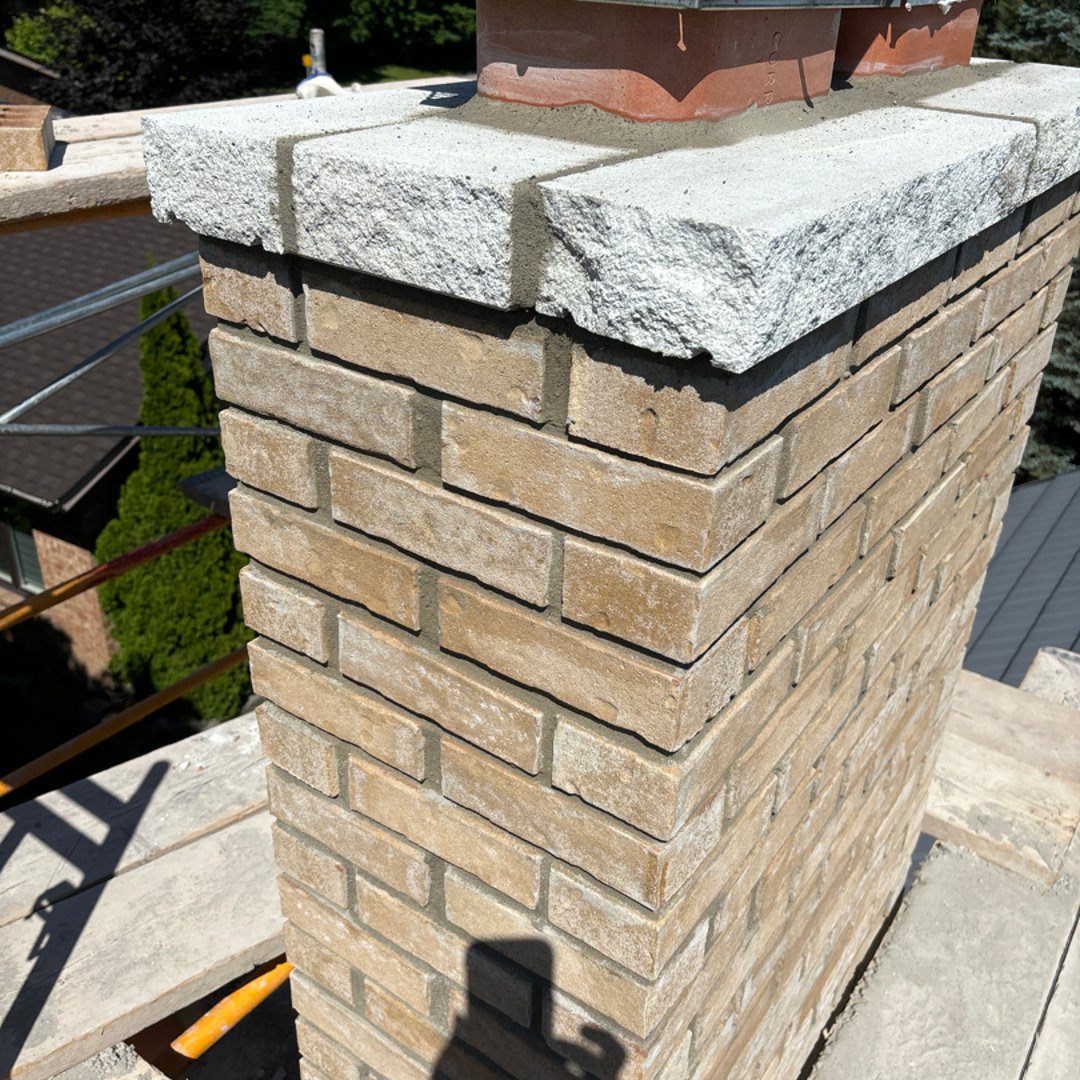
The crown is the concrete or mortar top that seals around the flue and sheds water away from the structure. When it cracks, water gets into the top courses of brick and mortar.
Cracks happen from moisture absorption followed by freeze-thaw expansion, movement at the flue connection, or poor crown design—too thin, wrong mix, no overhang. Once inside, that water saturates masonry and works its way down, causing staining and progressive deterioration.
Small cracks become large ones quickly in Ontario's climate. The chimney crown repair guide covers the details.
3. Flashing Problems
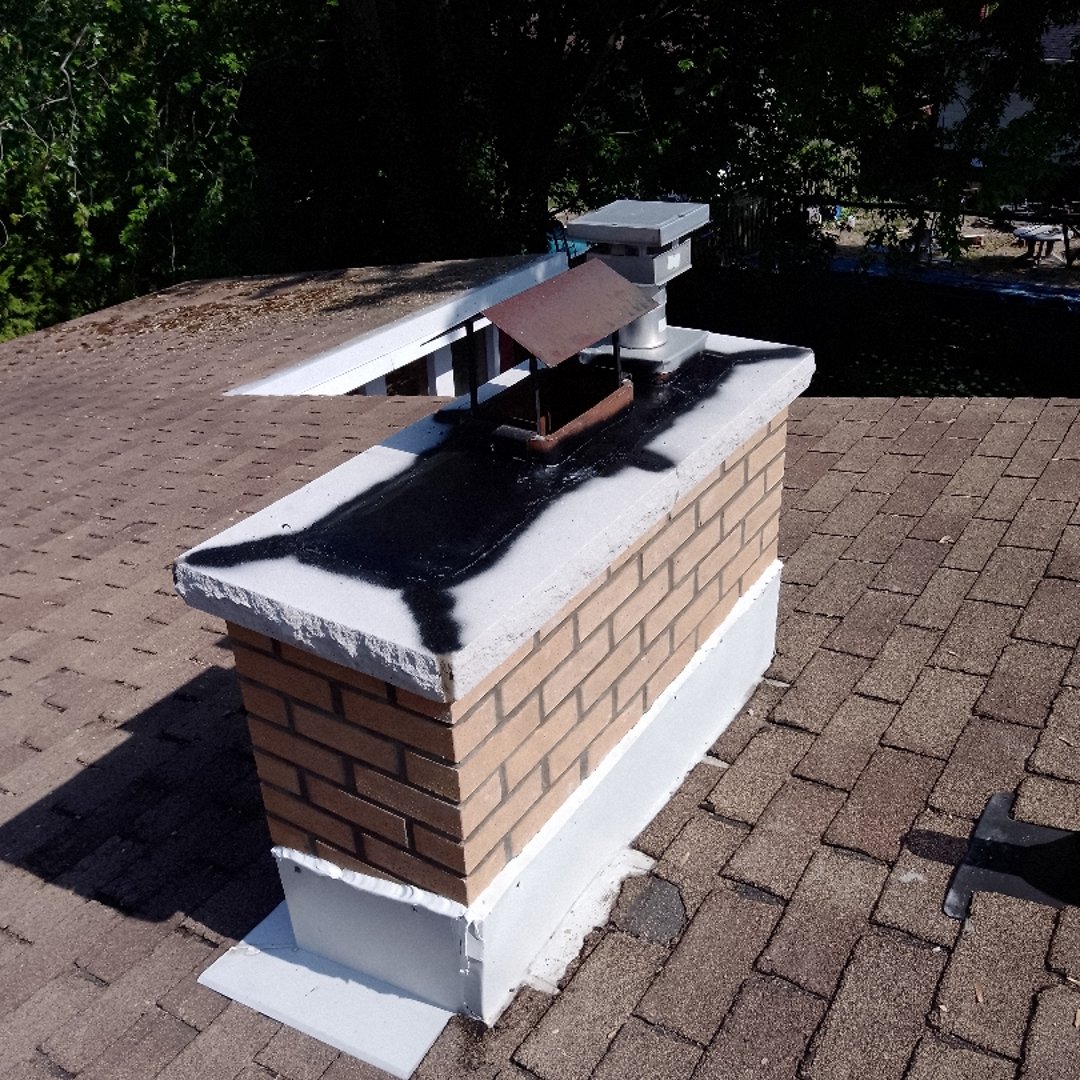
Flashing is the metal interface where the chimney meets the roof. When it fails—metal fatigue, poor installation, sealant breakdown, or movement—water gets in near the roofline.
"Ryan and his team from Fix My Bricks repaired the cracks in my mortar. The team was outstanding! Very efficient, very polite and very clean." — Chris B.
Flashing leaks show up as attic staining or damp patches on walls near the chimney. They get blamed on the roof or mistaken for a masonry issue, which leads to incomplete fixes. Sometimes the solution involves coordinating between a roofer and a mason.
4. Mortar Joints and Brick Deterioration
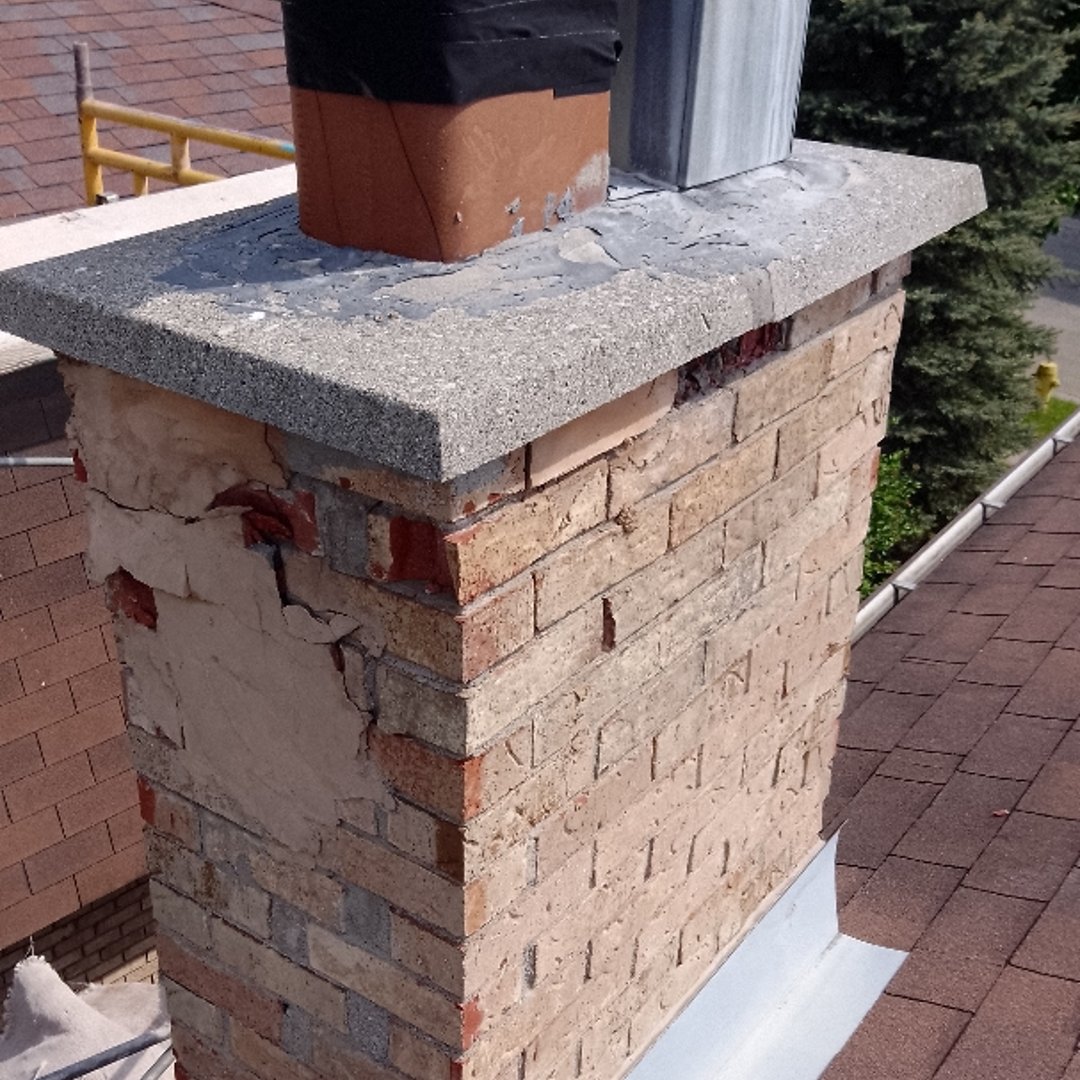
Crumbling or recessed mortar joints, spalling brick, and visible gaps all let water soak into the chimney structure. Once inside, it travels down and shows up far from where it entered.
Mortar fails from moisture entry (often starting from cap/crown/flashing issues), age, incompatible past repairs, or Ontario's freeze-thaw cycles accelerating deterioration. Water that enters through deteriorated joints doesn't just stain—it weakens the structure.
The scope often includes addressing the top of the chimney too. Repointing joints without fixing the crown means water keeps getting in. If mortar deterioration is part of your leak, our tuckpointing service closes those water paths.
Learn to spot warning signs early with the guide to chimney damage signs.
5. Condensation (Not Always Rain)
Damp smell, moisture without a clear rain pattern, staining around the firebox, persistent dampness even during dry weather—this might not be rain entry at all.
Condensation forms when warm, moist combustion gases meet cold surfaces inside the flue. It drips down or stains the firebox and surrounding masonry. Venting issues or an improperly sized liner make it worse.
This gets misdiagnosed as a leak constantly. If you repair the crown, cap, and flashing but the issue is condensation, the moisture continues. During your inspection, explain when you see moisture and whether it's connected to weather or fireplace use.
What Happens If You Ignore It
Chimney leaks don't improve on their own. Here's the progression:
Stage 1: A crack in the crown, a gap around the cap, or failed flashing keeps letting water in. Minor staining appears.
Stage 2: Water saturates brick and mortar. Freeze-thaw cycles expand cracks. White staining (efflorescence) appears on brick.
Stage 3: Deterioration accelerates. Multiple bricks begin spalling. Mortar failure becomes widespread. Interior staining worsens.
Stage 4: Structural concerns develop—leaning, separation from house. Large sections of masonry failing. Safety hazards emerge.
This progression takes 2-3 years for rapidly deteriorating chimneys or 10-15 years for slow decline. Ontario's freeze-thaw cycles accelerate it.
The cost math: Fixing a cracked crown now prevents a partial rebuild later. A $500 repair today prevents a $5,000 problem in three years.
When to Call a Professional
Call for an assessment if you're seeing:
- Active dripping, spreading stains, or recurring moisture after rain
- Crumbling mortar, missing chunks, spalling brick, or loose masonry
- You've "fixed" it before and the leak keeps coming back
- The leak is near the roofline and you're not sure if flashing is involved
- Strong damp or musty smells near the chimney
"We are very happy we contacted Fix My Brick. This is a professional company, we received a proper assessment of what needed to be done & a written estimate." — Mira B.
A professional traces the water path, identifies all entry points, and gives you a clear plan to close them. That's how you stop the leak for good—not by patching symptoms, but by addressing the root cause.
Our team serves the GTA, Hamilton, Niagara, Kitchener-Waterloo, and London.
Get a Clear Answer About Your Chimney Leak
If you're seeing staining, dampness, or water around your chimney, the next step is simple: book an on-site assessment so a professional can trace the water path and explain exactly what's needed.
What to expect:
- Inspection of cap, crown, flashing, and masonry condition
- Photos and clear explanation of where water is entering
- Written scope with repair options
"Very happy with the chimney repair. The guys were very professional and knew what to do to my satisfaction. They left the place clean." — Danilo
Why homeowners choose us:
- Our own trained crews—no subcontractors
- WSIB insured and fully licensed
- 2-year workmanship warranty
- Serving Hamilton, Toronto, Mississauga, and Southern Ontario
Schedule your assessment or call (905) 807-0404.
Need Professional Masonry Services?
Our expert team is ready to help with all your masonry repair and restoration needs across Ontario.