
Why Your Brick Is Flaking Off (And What to Do About It)
Water freezes in your brick and pushes the surface apart. Here's why spalling happens in Ontario, and how to tell if it needs urgent repair.
On this page
Brick flaking off your wall? That's not old age. That's spalling—the face of the brick breaking apart and popping off.
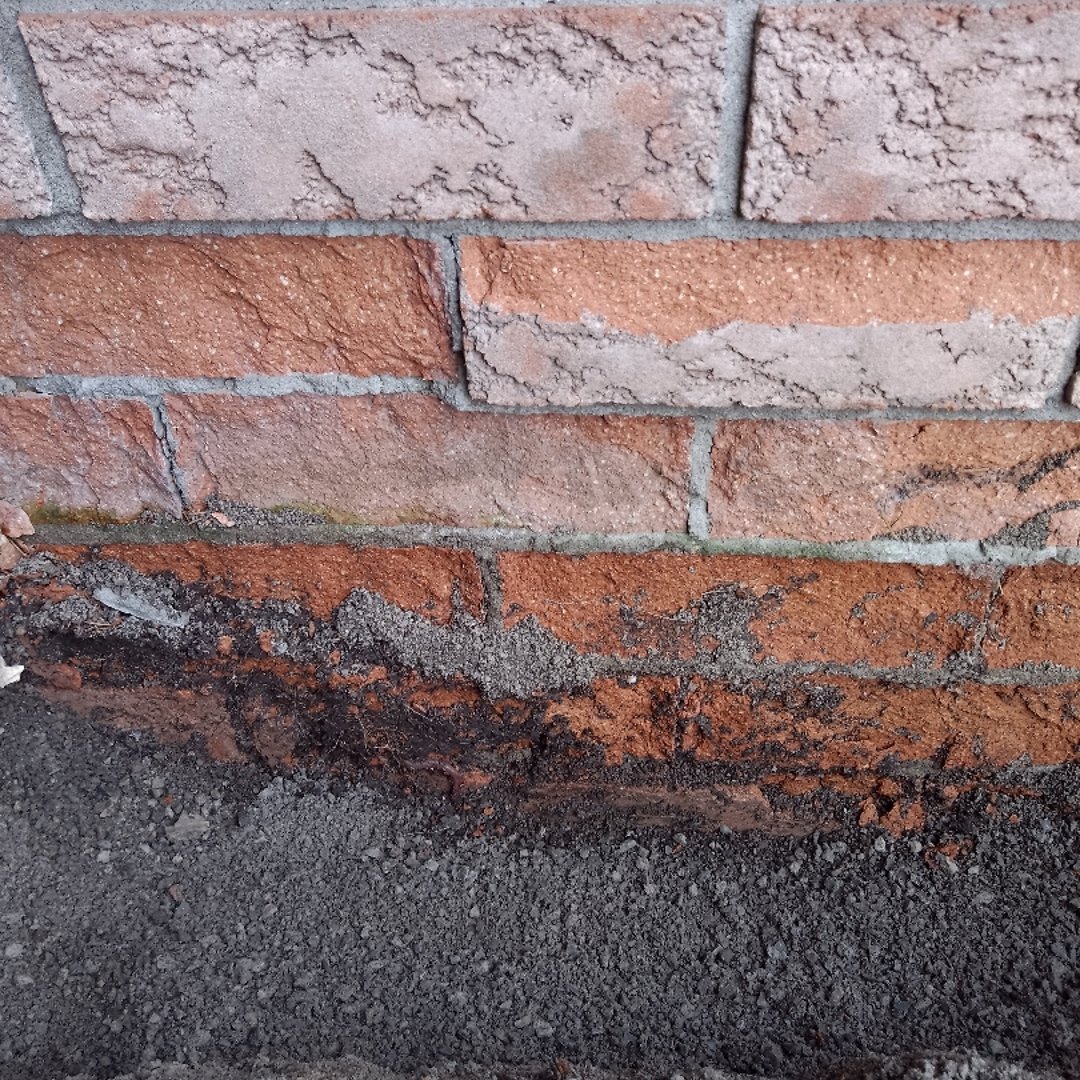
In Ontario, this usually means one thing: water got in, froze, expanded, and pushed the surface layer off. It happens a lot here. If you catch it early, the fix is usually small. Wait too long, and a 3-brick repair turns into a 15-brick job.
This guide covers what causes spalling, how to spot it, and when to stop watching and start calling.
Key Takeaways
- Spalling is brick surface breaking away, usually caused by water freezing inside the brick.
- Freeze-thaw cycling is the trigger, but moisture is the cause—stop water, slow the damage.
- If brick is actively popping off or you see a widening area, it's "Soon" or "Urgent," not just "monitor."
- Sealing or pressure washing without addressing the water source usually makes it worse.
- Photos + professional assessment beats guessing about urgency or next steps.
Is This Urgent? Quick Triage
Urgent (book an assessment ASAP / safety risk)
- Loose brick, especially above a door, walkway, or anywhere people pass
- Spalling is spreading visibly week-to-week or month-to-month
- You see moisture or staining inside the home near the spalled area
- Brick is soft to the touch (indicates deep water saturation)
Soon (address before next winter)
- Spalling visible in a concentrated area (golf-ball to basketball-sized patch) that's been stable for weeks or months
- Surrounding mortar is soft or missing joints (water pathway)
- You see spalling near downspouts, foundation edges, or other drainage problem areas
- Single-family home and this is the first visible damage (catch early before it spreads)
Monitor (document and watch)
- Spalling is tiny and isolated (less than a golf ball)
- No visible moisture inside, mortar joints are solid
- You can document it clearly with dated photos
- Plan to have a pro assess within 6–12 months (even if you're monitoring)
Safety line: If brick looks loose or could fall on someone, treat it as urgent and call a professional.
What Is Spalling Brick?
The outer face of a brick breaks apart and peels away in flakes or chunks. Sometimes it's just surface flaking. Other times, entire brick faces pop off, exposing the softer inner brick underneath. The brick looks rough, pitted, or "bubbling" as layers separate.
Here's what happens: water soaks into the porous brick, then freezes when the temperature drops. Ice takes up more space than water, so it pushes outward on the brick surface. Over many freeze-thaw cycles, this pressure pushes the outer layer apart. Salt inside the brick (from de-icing or old mortar) makes the problem worse because salt crystals also expand as they form.
Early spalling is small but visible. Left alone, the damaged area grows. Water finds more pathways into the wall. Eventually the repair goes from "replace a few bricks" to "rework a whole section." And if brick is loose above an entrance, it's a safety issue.
What to do next: Take clear, dated photos from multiple angles. Note when you first saw it and whether it's changing (growing, spreading, new flakes appearing). Look at the surrounding area: is mortar crumbling? Is there water pooling nearby? Are there downspouts above it?
The Freeze-Thaw Cycle: Why Ontario Climate Makes Spalling Worse
Temperature swings above and below freezing—common in Ontario spring, fall, and winter—force water inside the brick to freeze, expand, thaw, and freeze again. Over and over. Each cycle creates a little more pressure and damage.
Brick is porous. When it rains or when water from a downspout splashes the wall, moisture soaks in. Once the temperature drops below freezing, that water turns to ice. When it warms again, the ice melts. If the brick doesn't dry out before the next freeze, the cycle repeats—and the damage adds up.
One freeze might not do much. But in a typical Ontario winter, brick can go through 40–60 freeze-thaw cycles between November and March. Each cycle is a small push. Enough of them, and the face pops off.
You can't stop the freezing. But you can keep water out. That means fixing the moisture source: redirect downspouts, fix grading so water doesn't pool, or repair failing mortar that's letting water through.
Salt Makes It Worse: Why De-Icing Salts Add to the Problem
De-icing salts (road salt, sidewalk salt, driveway salt) dissolve in water and carry that salty water into the brick. As the water evaporates, salt crystals form—and when salt crystallizes, it also expands, creating more pressure inside the brick. Add freeze-thaw on top of that, and the damage accelerates.
We see this pattern constantly: garage pillars, front steps, anywhere near a salted driveway.
"Fix My Brick removed 4 courses of clay brick on each pillar of my garage entrances that were cracked and crumbling due to the absorption of salt and moisture from the driveway. They replaced with concrete blocks and parged. The result is a nice, clean look that will not crack or crumble." — Customer review
The salt doesn't "eat" the brick, but it makes the freeze-thaw damage happen faster and more severely.
Homeowners sometimes think "if I just switch to a different de-icer or salt alternative, the spalling will stop." But if water is still getting into the brick, the problem continues. The salt is making it worse, but it's not the root cause—moisture saturation is.
Reduce salt exposure where you can (better drainage, better de-icer choice). But more importantly, fix the moisture source. Sealing the brick might help if you first solve the water entry problem—otherwise, sealing traps moisture and makes spalling worse.
Where You'll See Spalling First
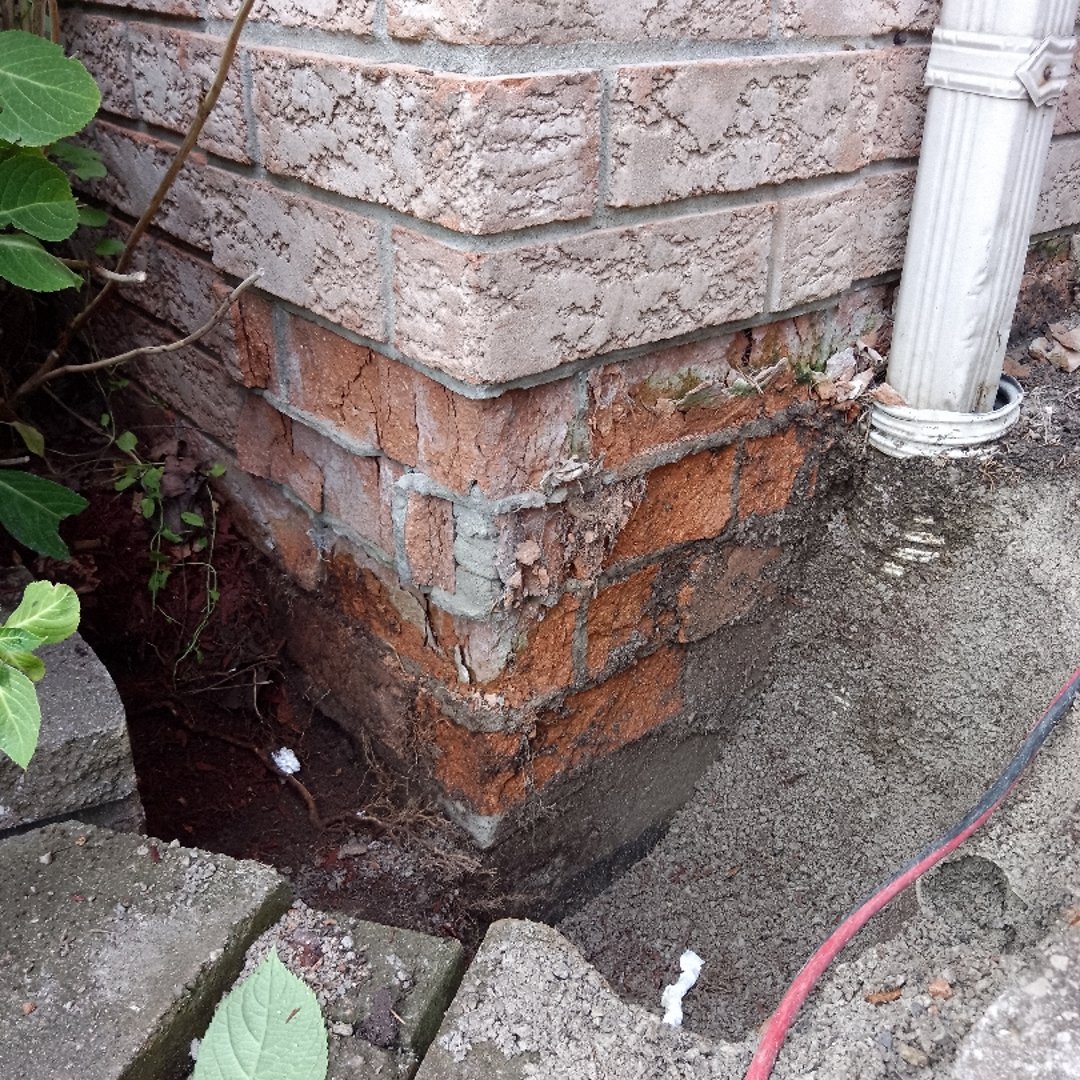
We see spalling in the same spots on almost every job: base of walls (especially where grading has settled), near downspouts, beside driveways where salt spray hits, and chimney tops exposed on all sides. Porch edges are another common one—water pools on three sides and the brick never fully dries.
These areas get more water exposure. The base of a wall pools water from poor grading. A downspout dumps water and splash-back directly onto brick. Chimney sides are exposed to wind and rain from every direction. These areas dry slower and stay saturated longer, so the freeze-thaw cycles hit harder.
If you see spalling in these "wet zones," it tells you the water source is nearby. Finding and fixing the water problem (better drainage, redirect the downspout, repair mortar) solves the spalling problem at its root—not just surface-level.
Walk around your home after rain and check these spots: Does water pool at the base? Does a downspout spray brick? Is mortar crumbling where water collects? Take photos and note patterns. If spalling is in one of these wet zones, fix the water source first.
Homeowners in Hamilton, Toronto, and across the GTA see this pattern regularly—especially in older neighbourhoods where drainage systems have settled over time.
Older Brick vs Newer Brick: Why Some Homes Are More Prone
Older brick (50+ years) is often softer and more porous than newer brick. Soft brick absorbs more water, so it's more vulnerable to freeze-thaw damage. Modern brick is usually denser and more weather-resistant.
Older Ontario homes were often built with soft, locally-made brick. Beautiful and age-appropriate for heritage homes, but not as durable as today's dense brick. Softer brick means more water absorption, which means more spalling risk in our freeze-thaw climate.
We recently replaced spalling brick on a 120-year-old home—the homeowner was worried about matching:
"I highly recommend these guys. Fix My Brick replaced spalling brick on my 120 year old house. I was worried about how the new brick would match with the existing, but he did a great job of it. Every step of the way, Ryan made sure we were happy with the work." — Customer review
If you have older brick and you're seeing spalling, you're not alone—this is common for heritage and pre-1960s homes in Ontario. But it also means catching it early matters more. Softer brick spreads damage faster.
If your home is older and you see spalling, get a professional assessment sooner rather than later. Have them assess the brick type and porosity so you understand the risk.
Prevention: How to Reduce Spalling Risk
You can't stop Ontario's freeze-thaw cycles, but you can control how much water gets into your brick. Here's what actually works:
Fix drainage problems first. If water pools at the base of walls, fix your grading. If downspouts splash brick, extend them away from the foundation. If your foundation parging is cracked, repair it so water doesn't pool against the brick.
Keep mortar joints healthy. Soft or missing mortar lets water travel directly into the brick. Repointing with good mortar (matched to the original) stops water from taking that shortcut.
Don't seal without fixing the water source. Sealing can trap moisture inside the brick, causing more damage (not less). If a pro recommends sealing, make sure they've addressed the water entry problem first.
Avoid high-pressure washing. Power washing can force water deeper into the brick and damage mortar joints. If you need to clean brick, use low pressure and let it dry completely.
Inspect after winter. Spring is when you'll see the most freeze-thaw damage. Walk around your home, take photos, and note any new spalling or spreading.
What Happens If You Ignore Spalling
First month or two: The spalled area stays roughly the same size. You might see a few new flakes at the edges, but it feels stable.
Over months to a season: Water continues soaking into the brick through the damaged area. More freeze-thaw cycles hit the new, exposed interior brick (which is softer). The damaged zone grows—not always dramatically, but steadily.
Over a year or more: The damage spreads across a wider area. Mortar joints in the same region can soften or fail. Water starts finding pathways deeper into the wall. What started as a small repair (replace 2–3 bricks) becomes a bigger job (replace a whole section, rework joints).
Worst case: Water reaches the interior, causing dampness, potential mould, or structural concerns. At that point, the repair is more expensive and invasive.
Catch it early and you're replacing 3 bricks. Wait too long and you're replacing 15. Early assessment usually keeps the repair manageable.
What a Professional Assessment Includes
A professional will:
- Visually inspect the spalled area and the surrounding brick and mortar (looking for patterns of water entry)
- Take photos and document "how much of the wall is affected"
- Test mortar condition (soft joints mean water pathway)
- Identify the water source (downspout splash? Poor grading? Failing mortar?)
- Check inside for signs of water intrusion (dampness, staining, mould)
- Provide a clear scope of repair: how many bricks need replacing, whether joints need repointing, and whether the water source needs fixing
Here's what to expect: An honest timeline, clean worksite, matched materials, and clear cost factors—not a mystery process. You'll know exactly what needs fixing and why.
"Rodrigo and his crew did an amazing job repairing my chimney and spalling bricks at the front of my house. They were timely, and worked diligently non-stop through the day. High quality workmanship, all the cracks and repair work blended in seamlessly." — Connie
When to Call a Professional
You should call if you see:
- Spalling or flaking brick, not just cosmetic staining
- Spalling that's spreading (growing visibly over weeks or months)
- Brick that feels loose or unstable, especially above an entrance or walkway
- Dampness or staining inside your home near the same area
- You're unsure about urgency—take photos and have a pro assess (it's a quick phone call or email)
- You've identified a water problem (pooling, downspout splash) and want to know what repairs are needed
Request a free assessment and we'll take a look. You'll get a clear answer about what's causing it, how serious it is, and what needs to happen next.
Need Professional Masonry Services?
Our expert team is ready to help with all your masonry repair and restoration needs across Ontario.