
Flagstone Repair: Common Problems, Causes, and Next Steps for Ontario Homes
Loose or cracked flagstone? Learn the common causes, what's urgent, and what a lasting repair typically involves—from a mason who's seen hundreds of Ontario patios.
On this page
Flagstone Repair: Common Problems, Causes, and Next Steps for Ontario Homes
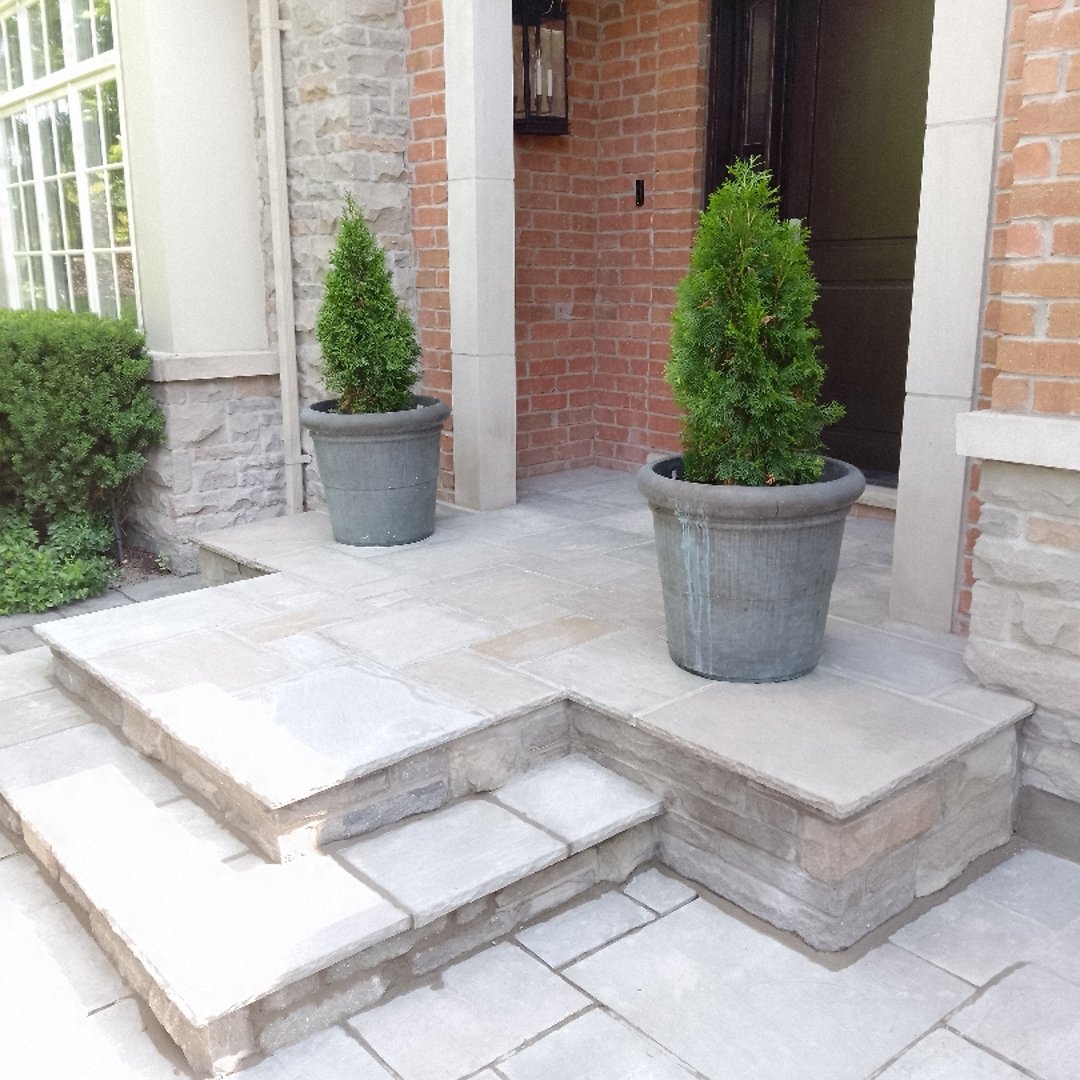
If your flagstone shifts underfoot or water pools in low spots, the problem usually isn't the stone—it's what's underneath.
After years of repairing flagstone walkways, patios, and entryways across Ontario, I've learned that most homeowners call about the same handful of issues: stones that wobble, joints that are crumbling, cracks that keep appearing. And in almost every case, the visible problem is a symptom of something happening below the surface.
This guide explains what you're actually dealing with, what's urgent versus what can wait, and what a lasting repair looks like. It's decision support—not a DIY manual.
Key Takeaways
- ✅ Most flagstone failures start with movement or moisture under the stones, not the stone itself
- ✅ Loose or uneven flagstone at steps and entrances is a safety issue—address it first
- ✅ Joint failure is often a sign water is getting into the base
- ✅ Good repairs prevent repeat failures by addressing base stability and drainage
- ✅ A professional assessment should confirm repair vs replace and the true root cause
Quick Triage — Is This Urgent?
Level 1: Urgent (book an assessment now / safety risk)
- Loose stones on steps, landings, or primary entrances (trip/fall hazard)
- Sudden settling or lifting that creates sharp edges between stones
- A stone that shifts underfoot (treat as unsafe until proven otherwise)
Level 2: Soon (repair before it spreads)
- Multiple stones rocking or shifting across a patio or walkway
- Joint material missing or crumbling in multiple areas (gaps + weeds)
- Cracks spreading or repeatedly appearing in the same zone
Level 3: Monitor
- One small hairline crack that hasn't changed
- Minor surface wear with stable stones and intact joints
If you're unsure, start with the service overview for context: flagstone repair services.
Common Flagstone Problems (What You're Seeing)
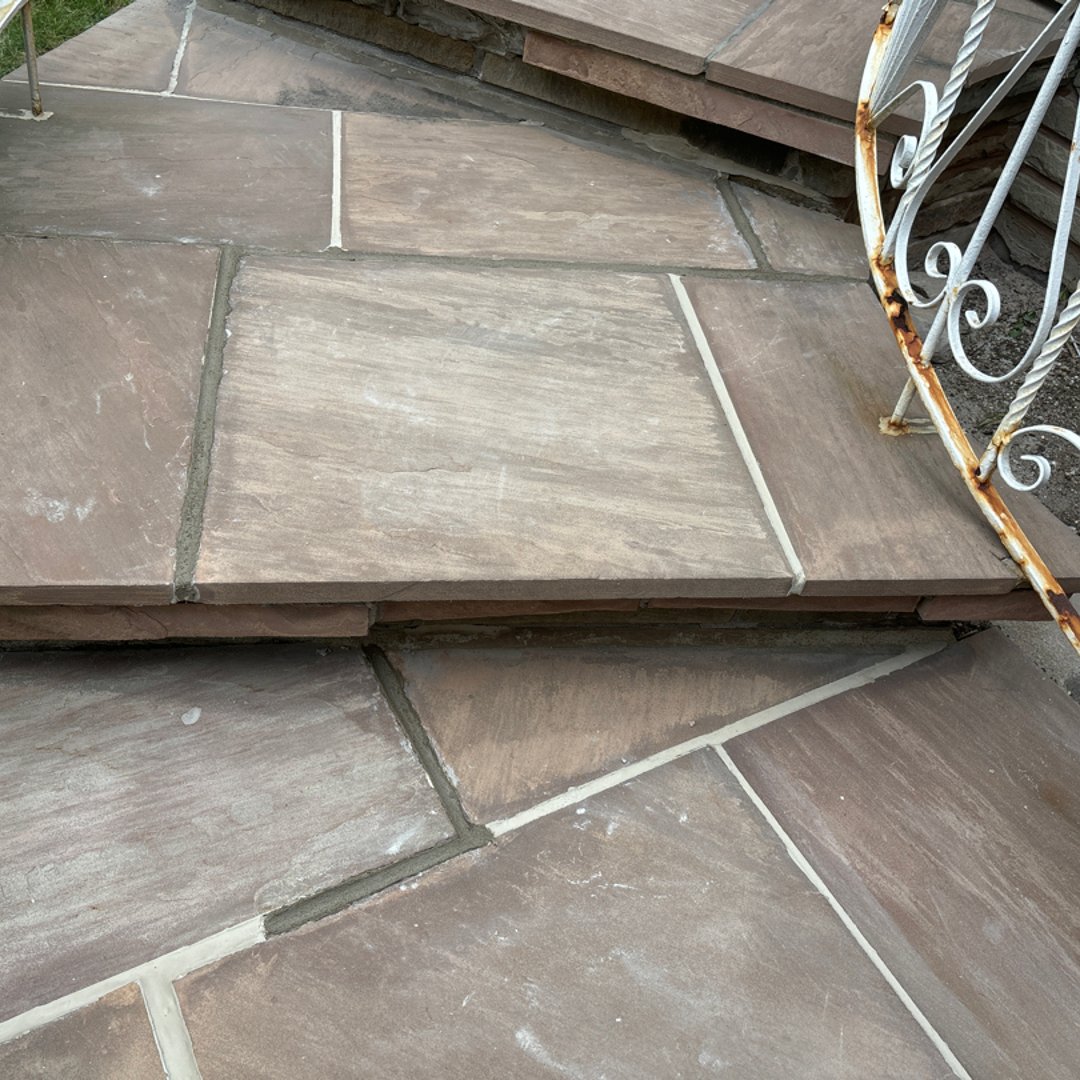
Most homeowner concerns fall into a handful of patterns:
- Loose or rocking stones
- Uneven or sunken stones (settlement)
- Cracked or split stones
- Missing or failing joint material (mortar/sand/filler)
- Surface flaking or spalling at edges
These symptoms often overlap—and that's a clue the underlying issue is bigger than a single stone.
Loose / Rocking Flagstones
- What it looks like: Stones wobble, edges lift, gaps widen, or the surface feels unstable.
- What usually causes it: Nine times out of ten, it's base washout—water got under the stone and eroded the bedding. We see this constantly when downspouts drain toward patios or when joint material has failed for years. Less common: the original bedding was never adequate, or freeze-thaw cycles displaced the base.
- Why it matters: It's a safety issue first, and movement tends to accelerate cracking and joint failure.
- What to do next: Book an assessment focused on stabilizing the base, not just refilling joints.
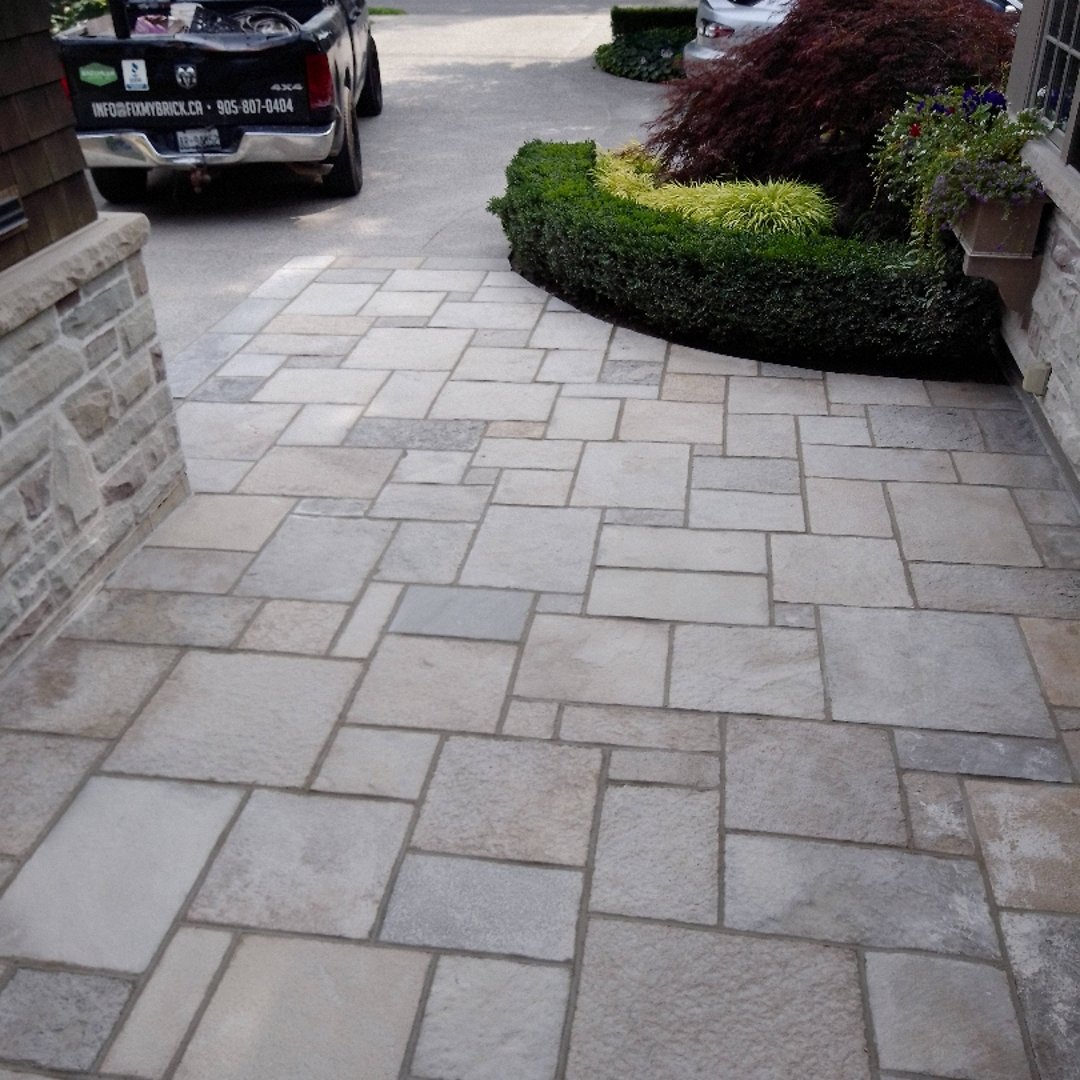
A recent GTA pathway job is a good example. The homeowner had loose stones and uneven sections—classic base washout signs. Rodrigo's crew re-set the stones with proper base correction, and the pathway now looks like it was just installed. "They were great to work with, punctual, and the new pathway looks great," the homeowner said. That's the outcome when you fix the cause, not just the symptom.
For local context:
- Toronto: Toronto flagstone repair
- Hamilton: Hamilton flagstone repair
Uneven / Sunken Flagstone (Settlement)
- What it looks like: Low spots, pooling water, or a noticeable "lip" between stones.
- What usually causes it: Base settlement, water repeatedly moving under the surface, or a drainage path that keeps saturating one area.
- Why it matters: Pooling water increases deterioration and can turn into a slip or trip risk in winter.
- What to do next: Ask whether drainage is contributing, and whether re-setting requires base correction.
If you want to understand how stonework fits into the bigger picture, start with stone masonry services.
Cracked / Split Flagstone
- What it looks like: Cracks through the stone, broken corners, or repeated cracking in the same spot.
- What usually causes it: Movement, point loads, or moisture stress when the stone is repeatedly stressed without proper support underneath.
- Why it matters: Cracks spread and edges become hazards. Repeated cracking in the same area is often a sign the stone isn't properly supported.
- What to do next: Confirm whether the crack is stable and cosmetic, or whether the stone needs replacement along with base correction.
Mississauga homeowners can start here: Mississauga flagstone repair.
Failed Joints (Missing Mortar / Sand / Filler)
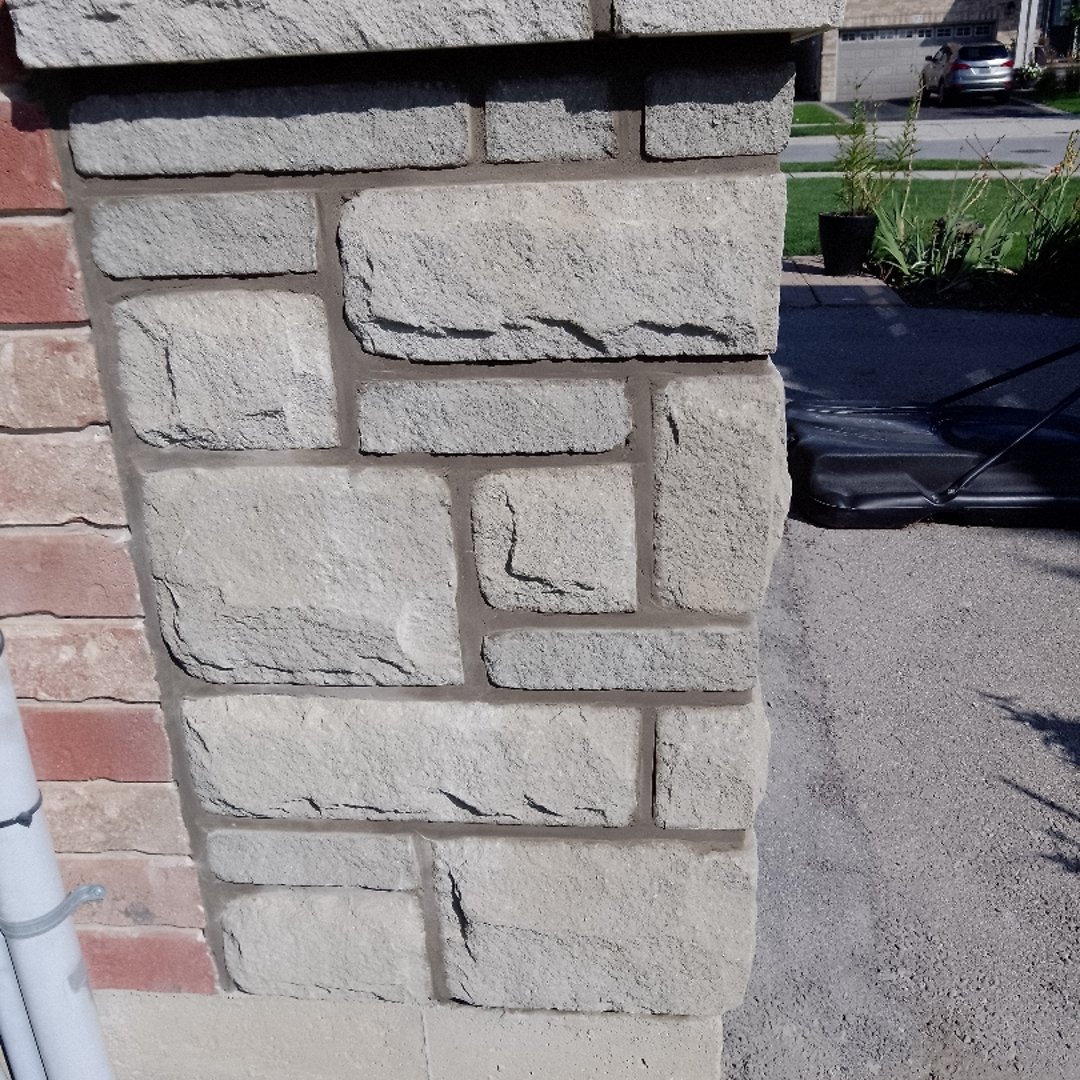
- What it looks like: Gaps between stones, weeds coming through, crumbling mortar, or missing joint material.
- What usually causes it: Movement, water entry, salts, or joint material that doesn't match the installation and exposure.
- Why it matters: Joint failure often comes before base problems. Once joints open up, water has an easy path underneath.
- What to do next: Ask what joint system fits your installation and how it supports water management long term.
One reason joints fail faster than expected is moisture + salts. When water repeatedly gets into joints and pores, freeze-thaw action and salt crystallization can accelerate surface breakdown and widening gaps over time. That's why lasting repairs focus on keeping water out and movement down, not just "filling the joint."
An Oakville homeowner hired us to tuck-point his flagstone walkway and stairs after the mortar started chipping away—about 16 years after the original install. Our crew (Eric and Jeff) paid close attention to the details, and we gave him clear instructions on what he needed to do for a proper cure over the next couple of days. That curing guidance isn't busywork—it's the difference between joints that last and joints that fail early.
If your install includes mortar joints, this background is helpful: mortar types guide.
Repair vs Replace — The Homeowner Rule of Thumb
Most homeowners want the simplest answer: "Can you fix this, or do I need to redo it?"
Here's the rule of thumb: repair is usually possible when the stone is mostly intact and the real issue is movement or joints. Replacement is more likely when the stone is structurally cracked, deteriorated, or repeatedly failing in the same area.
| Scenario | Repair approach (high level) | Replace approach (high level) |
|---|---|---|
| Mostly loose/uneven stones | Re-setting + base correction | Rebuild section if base is broadly failing |
| One cracked stone | Replace stone + address cause | Replace stone(s) if matching is possible |
| Widespread cracking | Diagnose movement/drainage first | Replace stones + rebuild base if needed |
| Joint failure only | Joint repair + water management checks | Replace if stone edges are deteriorated |
What a Professional Assessment Typically Includes
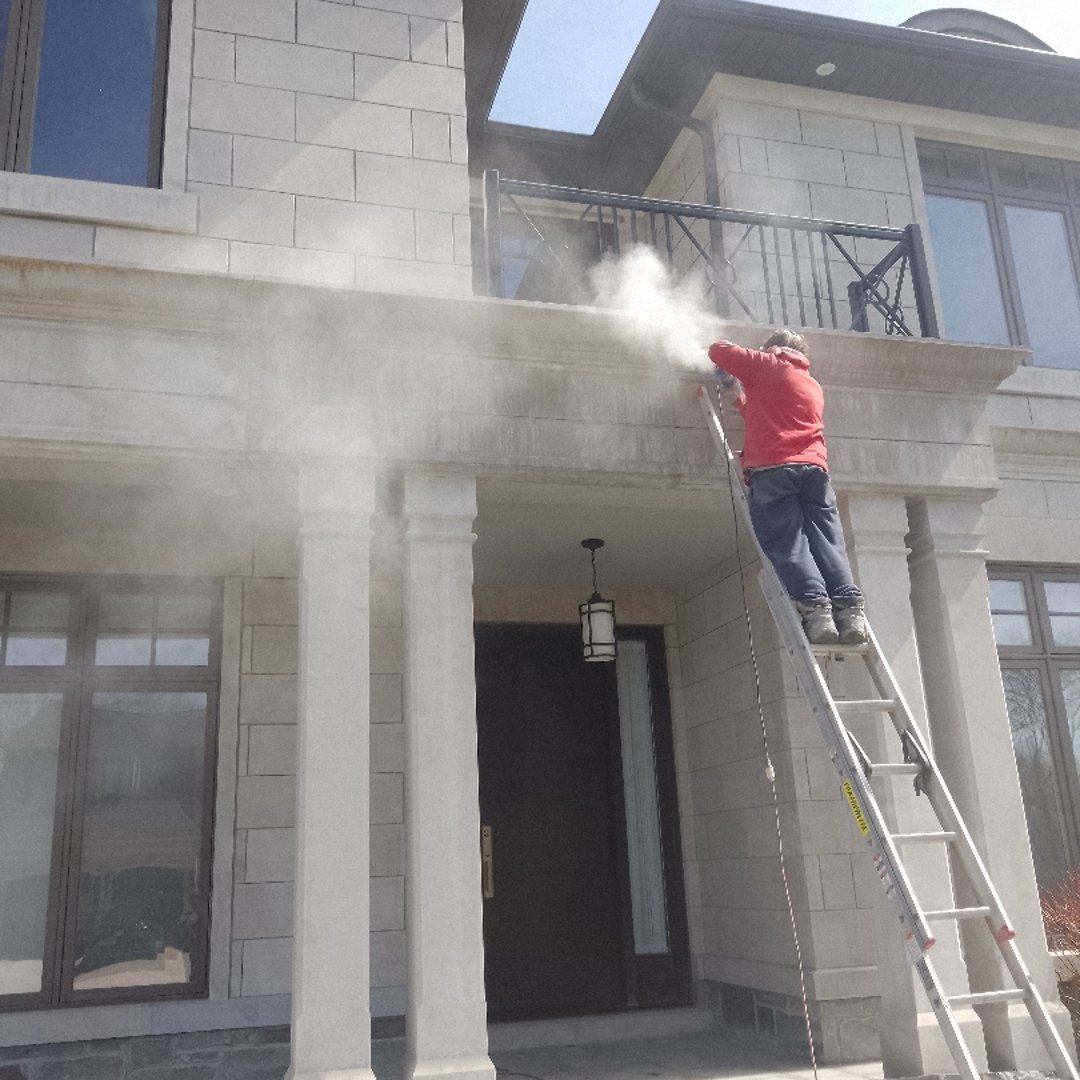
When we assess flagstone, we're looking for:
- Safety first: Which stones are trip hazards? Anything at steps or entrances gets flagged immediately.
- Movement pattern: Is this one loose stone, or is half the patio shifting? That tells us if it's a spot fix or base correction.
- Water path: Where is water going? A downspout 3 feet away might be the real culprit.
- Stone condition: Cracks, spalling, edge integrity—what's repairable versus what needs replacement.
- Joint condition: How is water entering, and what joint system makes sense for this installation?
- Repair vs. replace scope: Clear options, not pressure to do the biggest job.
After the walkthrough, you'll get a written scope with options—and a plan for keeping repairs visually consistent (matching stone and joint profile).
Sometimes conditions underneath aren't visible until we start. When that happens, we adjust scope and communicate before moving forward—not after. Here's how one homeowner described a project where exactly that happened:
What homeowners say about flagstone repairs
"I selected Fix My Brick to repair a significant flagstone area bordering the driveway and comprising the entryway. Everything about the company was professional from their response time to quality of work. The lead mason was meticulous in placing the flagstone and even the neighbours commented on how professional the crew was and how the project turned out. Within 30 days, they followed up with sealing the area—again on time and very professional. Although the scope of the project changed due to unforeseen conditions, the budget held. I would highly recommend this company." — Carol H.
If you're comparing scopes, it helps to understand the maintenance side too: stone masonry maintenance.
What Happens If You Ignore It
Most flagstone issues follow a predictable progression:
- Phase 1: A few loose stones → small gaps → water entry
- Phase 2: Joint loss spreads → base washout or settlement increases → uneven surface grows
- Phase 3: Repeated movement causes cracking and edge breakage → repair scope expands
- Phase 4: Safety risk increases (especially steps/entrances) + more stone replacement required
When moisture is involved, deterioration can speed up because water in pores and voids freezes and expands over repeated cycles. Salts (from de-icers or efflorescence) contribute to surface breakdown. That's why the earlier you address movement and water entry, the more of the original stone you can preserve.
When to Call a Professional
Call a mason when:
- A stone moves underfoot (especially at entrances or steps)
- Cracks repeat in the same area
- The surface is uneven enough to catch toes or wheels
- Joints are failing across multiple stones
- You want a lasting fix, not a recurring patch cycle
If the core issue is grading, drainage, or surrounding landscaping directing water incorrectly, a landscaper may also be part of the solution. Many lasting fixes involve both trades, and an assessment helps coordinate scope.
Next Steps
- If you're seeing "Urgent" or "Soon" signs, book a free on-site quote.
- Explore the service pages for scope context: flagstone repair and stone masonry.
Sources
Need Professional Masonry Services?
Our expert team is ready to help with all your masonry repair and restoration needs across Ontario.